The Ancient Craft of Weaving | Peter Collingwood
This wall hanging, for sale in our Mid-Century Design Auction, is the unmistakable work of Peter Collingwood (1922-2008), the British craftsman at the forefront of weaving for 50 years...
12/03/2020 20TH CENTURY ART & DESIGN
This wall hanging, is the unmistakable work of Peter Collingwood (1922-2008), the British craftsman at the forefront of weaving for 50 years. His 3-D ‘macrogauze’ hangings using linen thread and steel rods pushed forward the ancient craft of weaving to create the bold visual abstractions that are admired worldwide.
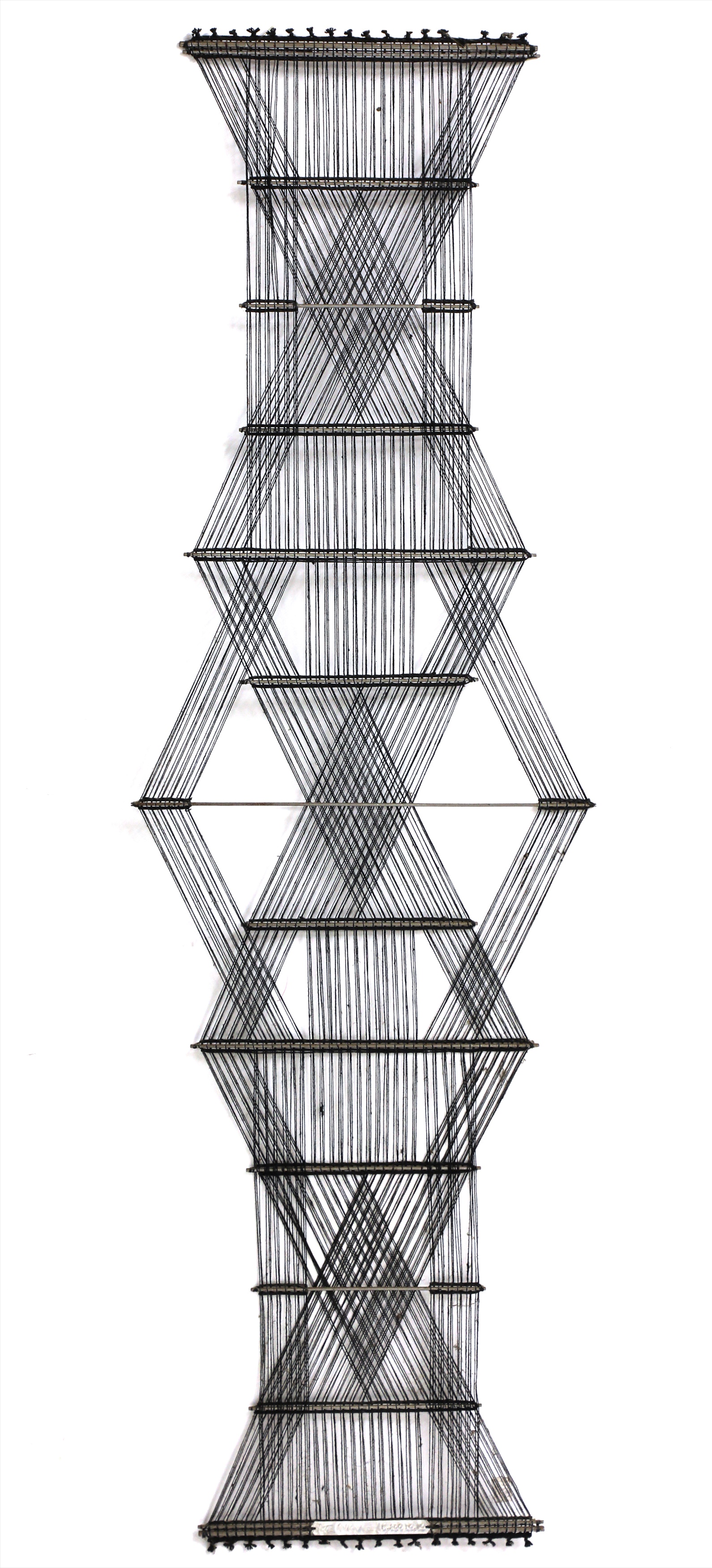
Although Collingwood is yet to achieve the sort of name recognition enjoyed by studio potters such as Lucie Rie or Hans Coper or the St Ives School of abstract artists, he moved in much the same circles. In 1952 he set up a studio at Archway in North London and sold his work in Liberty’s and Heals, before working at the Digswell Arts Trust in Hertfordshire (alongside Hans Coper) and from 1964 in Nayland near Colchester. And prices for his work have been rising. Record sums have been paid for Collingwood’s microgauze hangings across the past decade with the auction high currently standing at £22,500 for large and unique weaving from the 1980s sold in London in 2015.
The example for sale as part of our Mid Century Design auction is a textbook work measuring around 32cm wide by 1.35m high that is signed to the label and stated with the title M.200. No.10. Estimate is £1,000-2,000.
For more information please contact John Black
johnblack@sworder.co.uk | 01279 817778
Recent News
The Collection of Doris Lockhart Saatchi
Sworders are delighted to be presenting contents from the personal collection of the celebrated art collector Doris Lockhart Saatchi in our autumn auctions.
24 September 2026
The Silver of Eton’s Most Formidable Headmaster
A collection of Georgian silver flatware offered in our 22-28 September Open House sale provides a tangible link to one of the most memorable figures in the history of Eton College: Dr John Keate, Headmaster from 1809 to 1834.
23 September 2026
Forming Figures | John Hutton's Engraving Technique
Our 13 October auction, The Glass Sale, presents a fantastic private collection of John Hutton works.
23 September 2026