
A finely crafted rouleau vase, produced in the Kangxi period, comes to auction this November as a highlight in our Asian & Islamic Art sale.
25 August 2026
REMIND ME REQUEST A VALUATION CONTACT A SPECIALIST
Certain objects demand a moment of stillness - an opportunity to step back, admire their presence, and reflect on the skill and craftsmanship behind their creation.
This blue and white rouleau vase is one such example. Produced in China during the reign of the Kangxi Emperor (1662-1722), the third emperor of the Qing dynasty and one of the longest-reigning emperors in Chinese history, it belongs to a period widely regarded as a golden age of porcelain production. Kangxi porcelain is celebrated for its technical excellence, vibrant enamels, sophisticated decoration and artistic innovation.
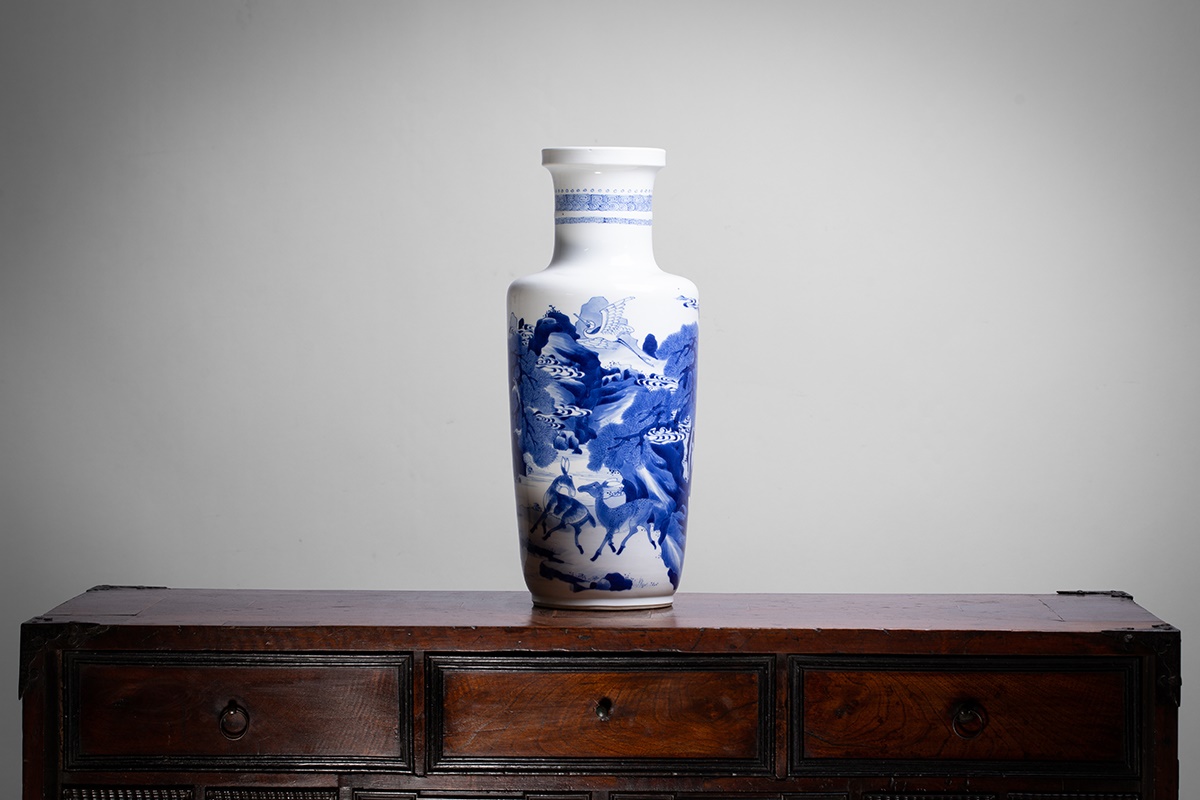
A Chinese blue and white vase, Kangxi (1662-1722) (£80,000-100,000)
The use of cobalt blue, so masterfully achieved during this period, became one of the defining characteristics of Kangxi porcelain. However, the cobalt pigment itself did not originate in China, but rather was the result of a wider exchange of materials, knowledge and technologies through international trade networks, particularly those connecting China with Central Asia and Persia.
Cobalt was valued across the Islamic world long before it became central to Chinese porcelain. High-quality cobalt ores from regions within the Islamic world were traded into China, particularly during the Yuan dynasty (1271-1368), when increased contact under the Mongol empire facilitated the movement of materials across Eurasia. Known in Chinese as qingliao (青料), meaning 'blue material', imported cobalt produced the intense blue tones that became highly prized by Chinese potters. At Jingdezhen, craftsmen combined this imported pigment with their advanced porcelain technology, developing the technique of painting cobalt beneath a transparent glaze to create the celebrated tradition of blue and white porcelain.
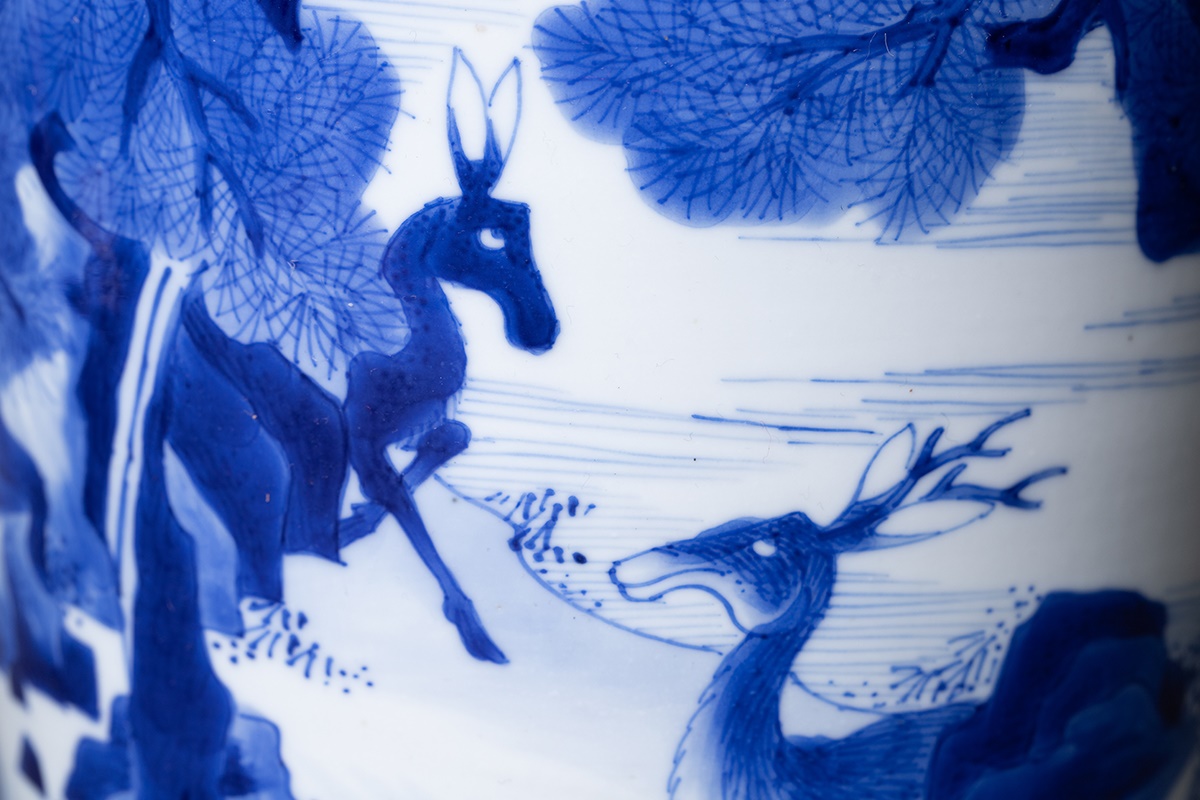
A Chinese blue and white vase, Kangxi (1662-1722) (£80,000-100,000)
The vase is painted in this distinctive underglaze blue, depicting four deer beside a winding river and three cranes perched among pine trees, all set within a continuous mountainous landscape. These motifs are far more than decorative elements; they convey layers of auspicious symbolism associated with longevity, prosperity, immortality, virtue and harmony with nature. Such imagery was especially favoured on scholar's objects, imperial wares, and ceramics created as prestigious gifts, where decoration often carried deeper cultural meaning.
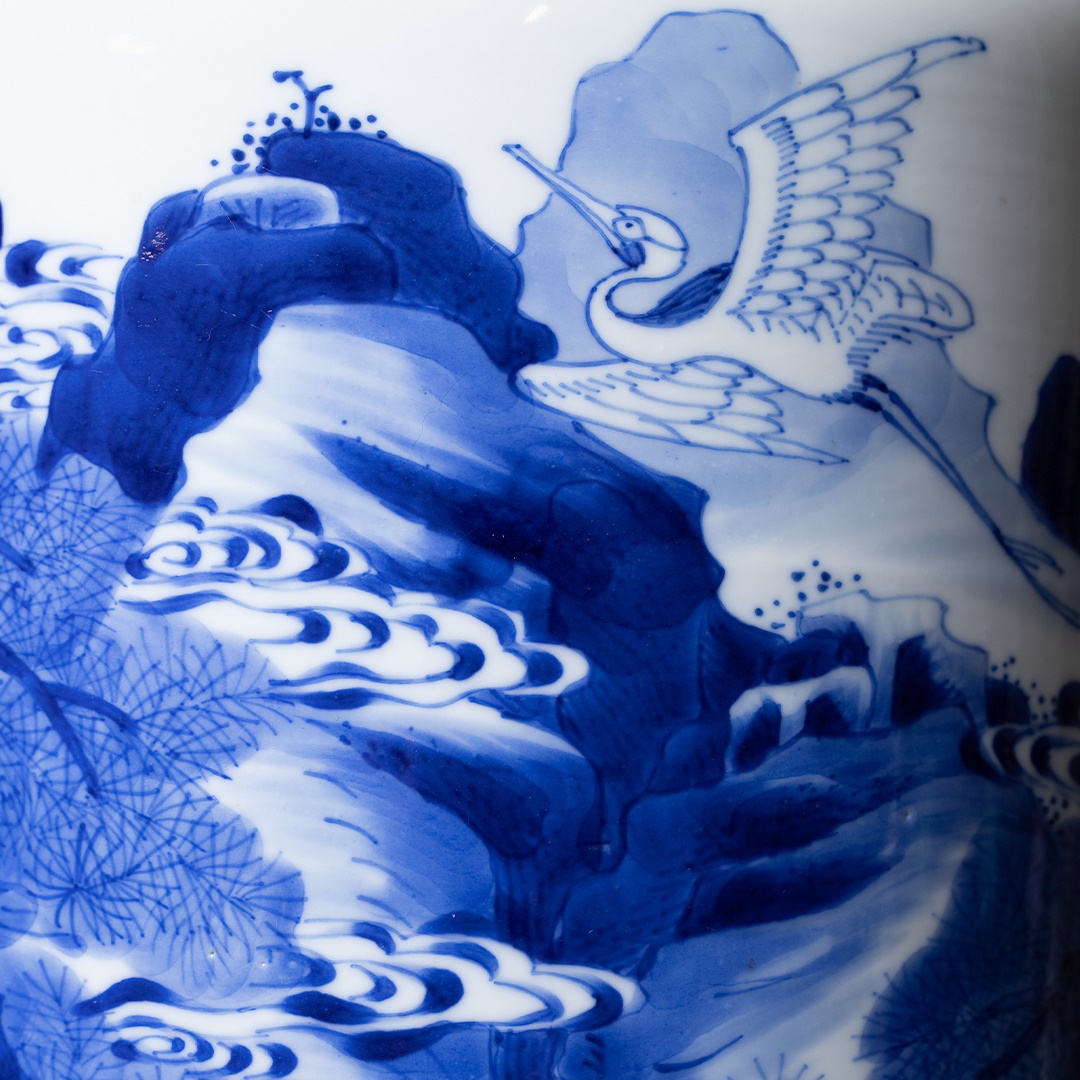
A Chinese blue and white vase, Kangxi (1662-1722) (£80,000-100,000)
Adding to the vase's rarity is its distinguished provenance and connection to Dr Lowell Young, an American collector whose approach was defined by connoisseurship and quality. In November 2012, Marchant, the renowned London Asian art gallery founded in 1925, held an exhibition dedicated to Dr Young's private collection, presenting 38 carefully selected examples of Ming and Qing blue and white porcelain. This vase was featured as no. 28 in the exhibition catalogue, a designation still evidenced by the original label preserved on its base.
This finely crafted object will be offered for auction in our Asian and Islamic Art sale on Friday 6 November. Viewing will be available at our London Gallery from Friday 30 October to Wednesday 4 November.
asianart@sworder.co.uk | 01279 817778

We are excited to bring a particularly rare piece of Murano glass to auction. This daring example of Dino Martens’s work will be offered on Tuesday 13 October in The Glass Sale.
18 September 2026
Here, close friend, art historian and former Senior Curator of Modern British Art at Tate, Andrew Wilson, offers an insight into James Birch’s remarkable collection and the extraordinary life behind it. Having known James since the late 1980s, Andrew has witnessed first-hand his restless curiosity, his friendships with artists and his instinct for the unusual.
15 September 2026
Discover the story behind two rare photographs of Martin Luther King Jr. and Lal Bahadur Shastri, exploring their historic meeting in London, and the significance of the original colour film.
8 September 2026