
Discover the opulence of a rare Chinese 'dragon' box, carved from prized zitan wood, which achieved a staggering £143,000 in our November Asian Art sale.
13 November 2023
EXPLORE DEPARTMENT REQUEST A VALUATION CONTACT A SPECIALIST
The 49cm wide casket, that would have been used to store precious objects, is made almost exclusively of zitan, a purplish-black, fine-grained timber (so dense that it sinks in water), that was the preferred wood of the imperial workshops. Suitable for fine and intricate carving, in this case the box is adorned with the powerful dynastic images of the five-clawed dragon amidst clouds (symbol of the emperor) and phoenixes (the empress).
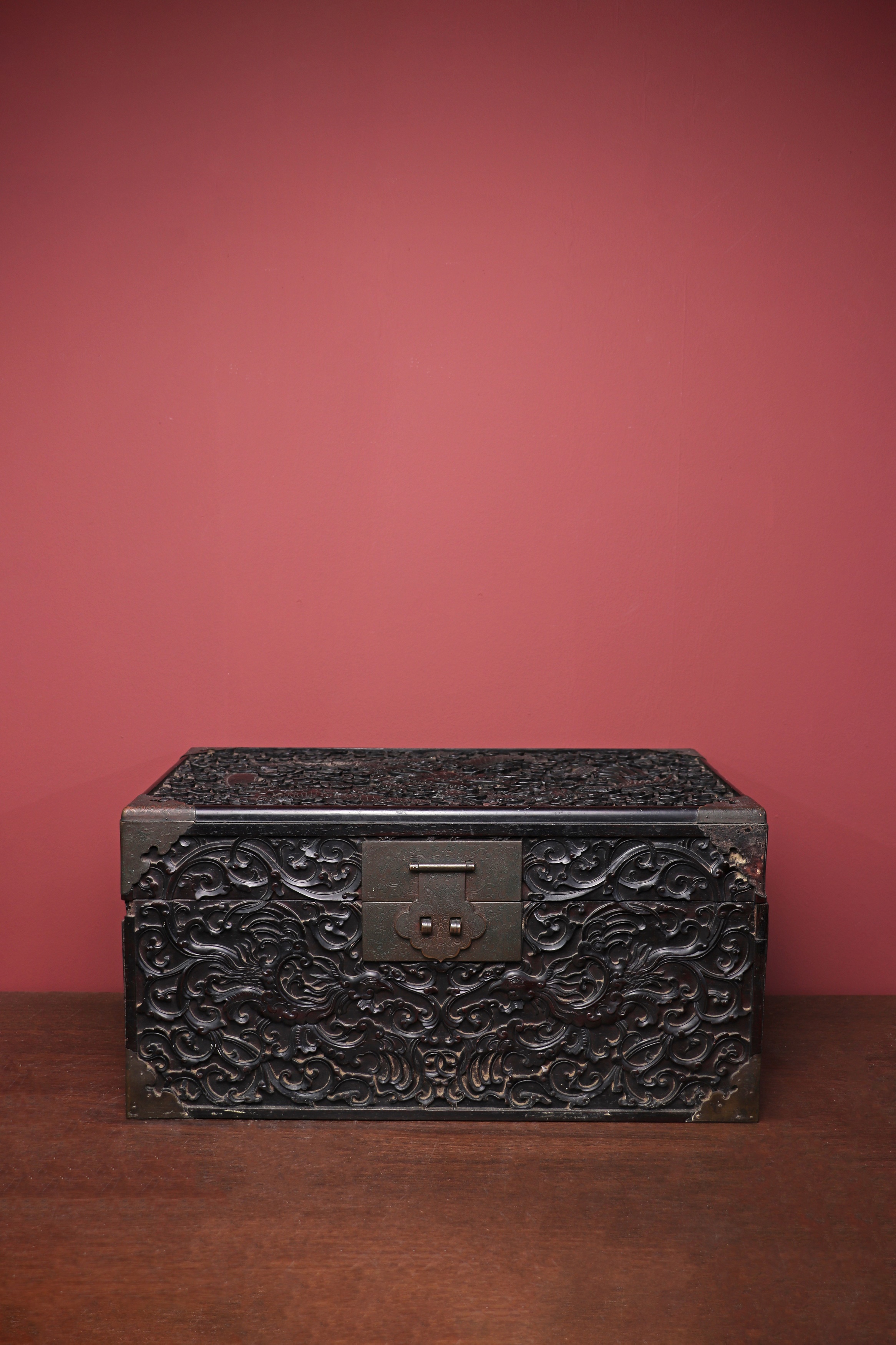
A Chinese zitan wood box and cover (£143,000)
By the early Qing period, zitan had become a very expensive commodity (many of the native species had been exhausted during the Ming dynasty) and its use was carefully controlled. When this box was made by master Chinese carpenters in the 18th or early 19th century, it would have been extraordinarily expensive. It remains so today. The box, that came for sale from a private seller who inherited it from grandparents who lived in Bullwood Hall, Hockley, Essex between 1930-1950.
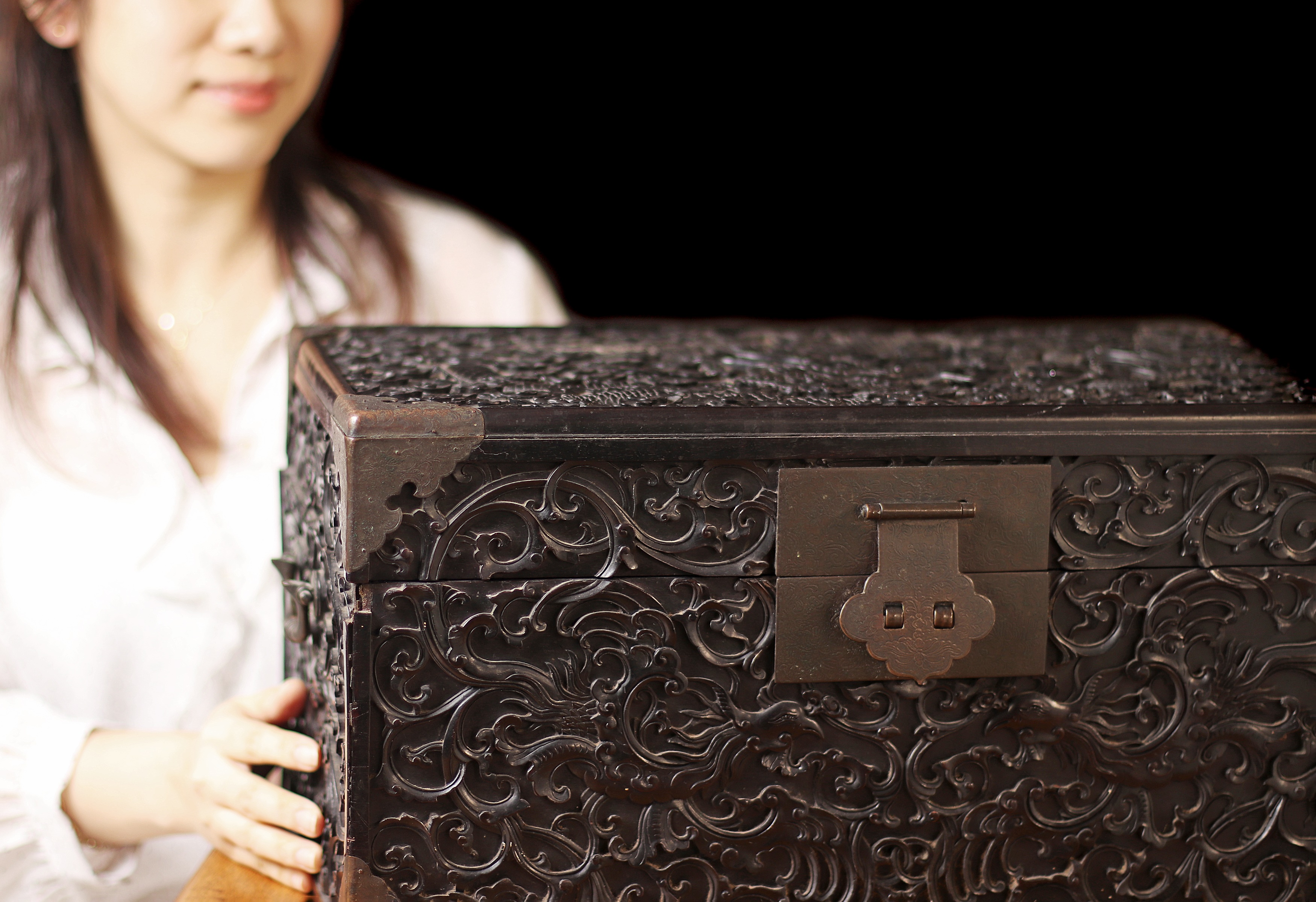
A Chinese zitan wood box and cover (£143,000)
“Zitan is China’s most revered wood and this dragon chest was superbly carved suggesting it was made in the imperial workshops, perhaps in the reign of the emperor Qianlong. It was not in perfect condition – it had several cracks – but buyers agreed it was another special discovery by our team.”
- Yexue Li Head of Asian Art.

Discover the story behind two rare photographs of Martin Luther King Jr. and Lal Bahadur Shastri, exploring their historic meeting in London, and the significance of the original colour film.
8 September 2026
Through a compelling series of photographs, this exhibition shines a light on The HALO Trust’s work in communities affected by conflict, capturing both the danger of landmine clearance and the hope that follows when land can be safely used again.
3 September 2026
The term ‘Company School’ refers to a genre of painting that emerged in India in the late 18th and 19th centuries, flourishing under the patronage of British East India Company officials, their families, and other European residents in India.
28 August 2026