
With an enduring link between important designers and department stores, works from a variety of these stores often prove extremely popular at auction, and we are proud to present examples of these in our 27 January Design auction.
8 January 2026
BROWSE THE CATALOGUE REQUEST A VALUATION CONTACT A SPECIALIST
The earliest known department store was Harding, Howell & Co. which was open from 1796 to 1820 and was located on London’s Pall Mall. The shop was separated into four departments: selling goods ranging from furs and fans, dress fabrics and haberdashery, to jewellery and clocks, and perfume and millinery. It wasn’t until the mid-19th century when stores started to expand their offerings, beyond female-focused fashion and accessories. By 1843, stores such as W. & J. Sloane in New York began adding drapery fabrics, home furnishing and rugs to their list of products. As cities began to sprawl and urban centres grew, there began a need for shops to convert their storage areas into retail spaces. In 1877, a small London based department store named Bon Marché, not to be confused with Le Bon Marché in Paris of which it takes its namesake, began selling drapery thus making the inclusion of furniture more feasible.
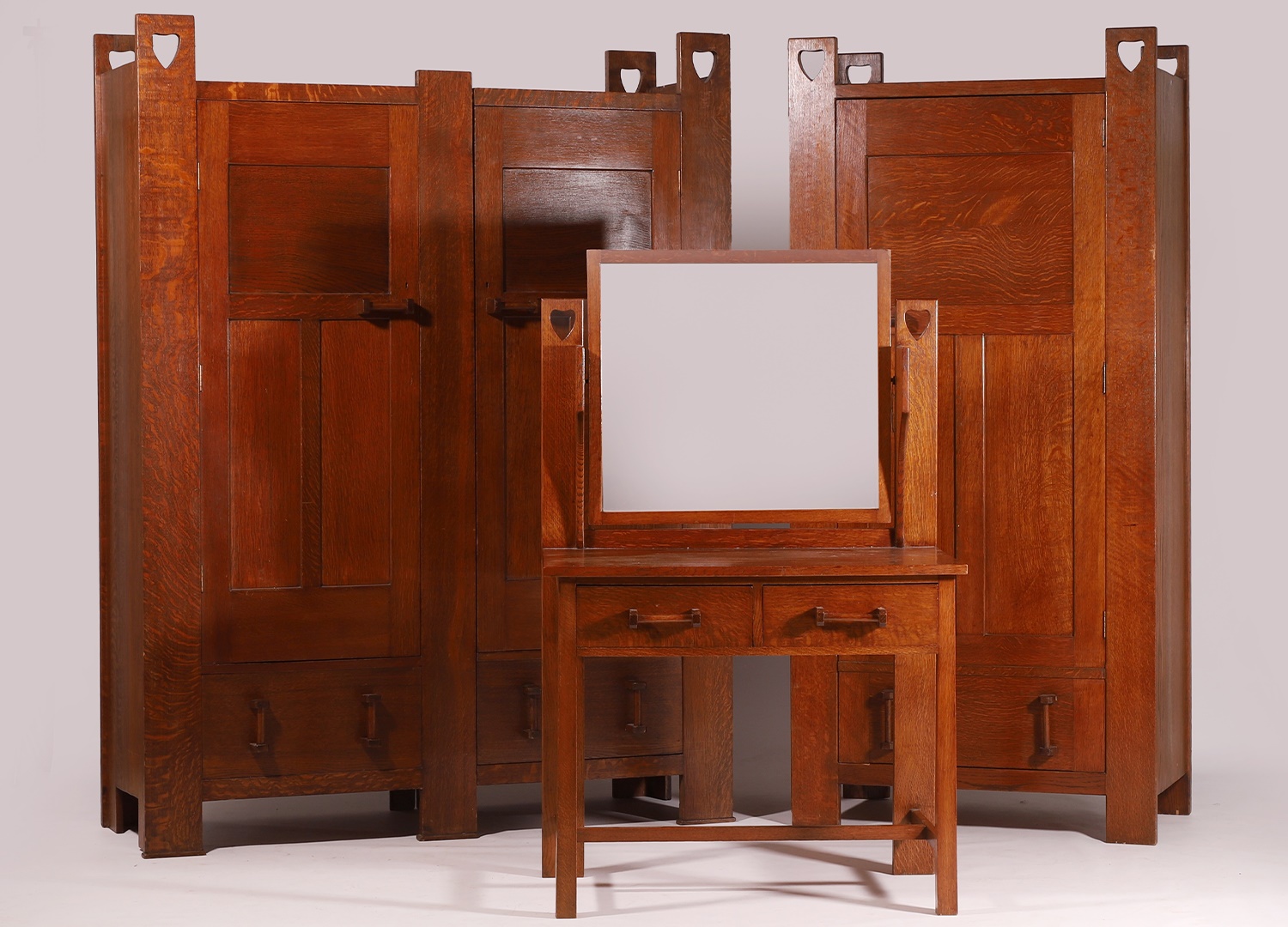
Liberty & Co., an 'Athelstan' dressing table and two wardrobes (£600-800)
By the late 19th century, a new wave of British department stores that were furniture and homeware led began to pave the way. In 1875, Arthur Lasenby Liberty founded Liberty and took over the lease of half a shop on 218a Regent Street; armed with a team of just three, he began by selling ornaments, fabric and objets d’art largely imported from Japan and East Asia. As the business grew, Liberty purchased the neighbouring properties and subsumed them into the existing shop. In 1884, a costume department was established under the directorship of Edward William Godwin, who was a distinguished architect and a founding member of The Costume Society, and they created Liberty clothing to challenge the fashions coming out of Paris.
This may sound like a traditional fashion-led department store, however, just one year later, in 1885, 142-144 Regent Street was acquired to house the exponentially growing demand for carpets and furniture. The basement was named the Eastern Bazaar and sold decorative furniture and objects. By the 1890s Liberty had set up his own in-house furniture and homeware line that was developed by a whole cohort of skilled designers such as Archibald Knox, Leonard Wyburd and René Beauclair. Ranging from silverware to bedroom suites, Liberty furnished the daily lives of the privileged few with a distinct aesthetic.
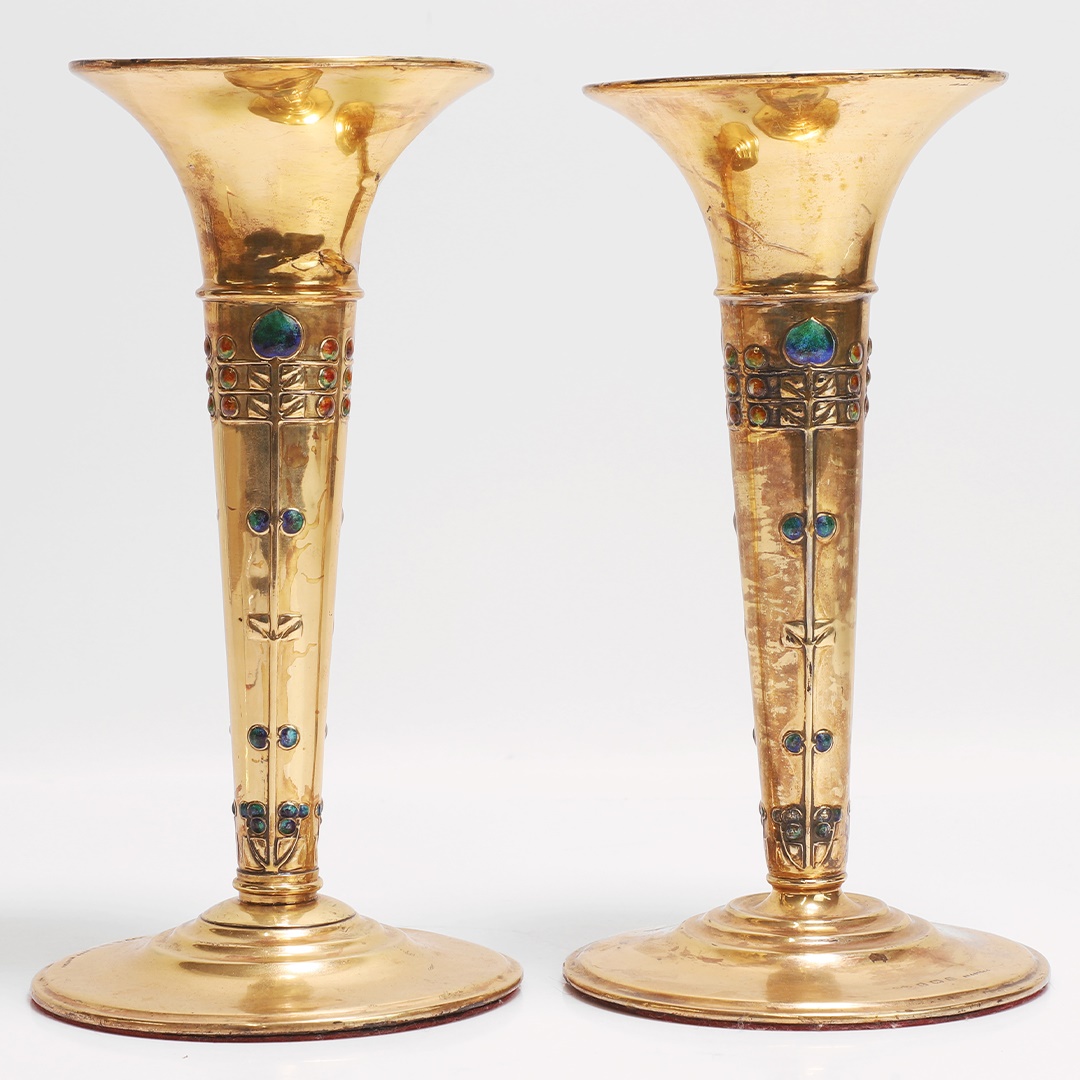
Archibald Knox (1864-1933) for Liberty & Co., a pair of 'Cymric' silver and enamel vases (£1,000-2,000)
Not far from Liberty, another store was expanding. Originally founded in 1810 by John Harris Heal as a feather-dressing business for mattresses in Rathbone Place, the company quickly progressed to selling carpets by 1815, and in 1818 moved into their Tottenham Court Road premises where they are still located to this very day. Fast forward to the 1890s, Ambrose Heal Junior, the great-grandson of John, entered the family firm and introduced furniture into the fold. In many respects, Heal’s does not conform to the definition of a department store, however, it is a kind of department store dedicated to all things that decorated the home. Ambrose designed furniture influenced by Arts and Crafts, and he was influenced greatly by the work of Ernest Grimson and Edward Barnsley, however, he managed to employ the use of mechanised production which allowed the style to become much more accessible to the middle classes.
In 1915, Ambrose Heal became a founding member of the Design and Industries Association and Heal’s became a centre for displaying the designs of the organisation's members. By the 1920s, Ambrose had become enamoured with the work coming out of Scandinavia and Northern Europe, and began to introduce it to an English audience. Alvar Aalto and Mies van der Rohe were two big names that Ambrose helped to promote; particularly their use of new industrialised materials such as plywood and tubular steel.
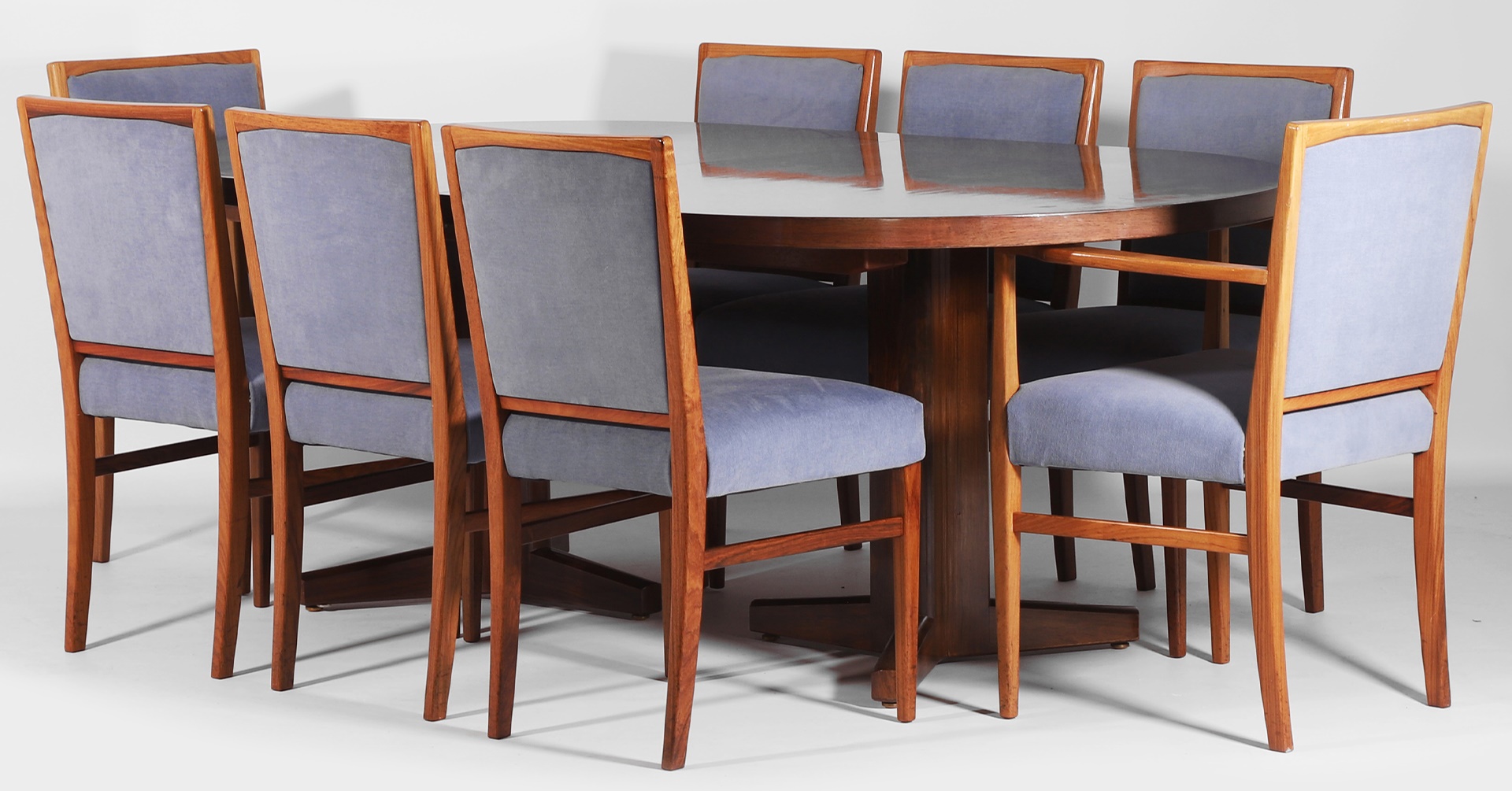
§ Robert Heritage (1927-2008) for Archie Shine, a rosewood dining suite (£600-800)
Although furniture may no longer be as prominent on the shop floors of department stores anymore, there are ways in which it is being reinvented and brought to the attention of a newer audience. Dover Street Market was founded in 2004 by Rei Kawakubo (of Comme des Garçons fame) and her husband and long-term collaborator Adrian Joffe. Named after the street its original premises were located on, Dover Street Market focuses primarily on fashion, however, it is how it is displayed that links it to the world of furniture. The store relocated to a much larger building on Haymarket in 2016 which used to be a former Burberry building. To describe each floor as simply a retail space would be an oversimplification: every level is a masterclass display that fuses together the worlds of fashion, art, furniture and objets d’art together. Most recently luxury brand The Row has a concession on the second floor which displays their pieces amongst furniture by Pierre Jeanneret and George Nakashima. In the modern age, the role of furniture within a department store has been brought into question and redefined. No longer is it being sold as functional, but as something equally as luxurious as fashion or handcrafted accessories.
We are delighted to be including works from a variety of these important stores in our upcoming Design auction, taking place on 27 January. From a group of works manufactured for and retailed by Liberty including an ‘Athelstan’ dresser and two wardrobes by Leonard Wyburd (lot 37) and a pair of ‘Cymric’ vases designed by Archibald Knox (lot 43), to 1970s furniture including a Robert Heritage dining suite purchased from Heals in 1973 (lot 343). This is testament to the enduring link between important designers and department stores that prove extremely popular at auction today.

design@sworder.co.uk | 01279 817778
As our Charity of the Year for 2026, The HALO Trust share an insight into the life-saving work they are currently undertaking in Yemen.
3 March 2026
We are delighted to offer the extensive archive of silversmith A. E. Jones in our next Open House sale, live for bidding from Tuesday 3 - Monday 9 March.
2 March 2026
Ahead of our inaugural sale, 'The 13th Note', taking place later this year, specialist Tony Salani shares an insight into a sale dedicated to the objects that define pop culture.
2 March 2026