
Our 13 October auction, The Glass Sale, presents a fantastic private collection of John Hutton works.
23 September 2026
VIEW COLLECTION REQUEST A VALUATION CONTACT A SPECIALIST
John Hutton is famed for being a muralist and glass engraver. Born in Clyde, New Zealand, he moved to England with his wife in 1936 and joined Suffolk's artists' commune.
During his time in an army camouflage unit during the Second World War, Hutton met architect Basil Spence, an architect, who later recruited him to work on the rebuilding of Coventry Cathedral following the Second World War. This collaboration marked the beginning of Hutton’s transition from mural painting to glass engraving.
Following his first major glass-engraving commission (four glass panels for the restaurant of the Cunard liner Caronia in the 1950s), Hutton developed his own unique engraving technique. Using a handheld, flexible tool fitted with rotating grinding wheels, he was able to create intricate designs directly onto the surface of the glass. Rather than employing traditional stained-glass techniques, in which pieces of coloured glass are joined to create an image, Hutton worked predominantly with clear glass, engraving his designs directly into its surface. The resulting works combined detailed figures and textures with the transparency of the glass, allowing light to pass through and become an integral part of the composition.
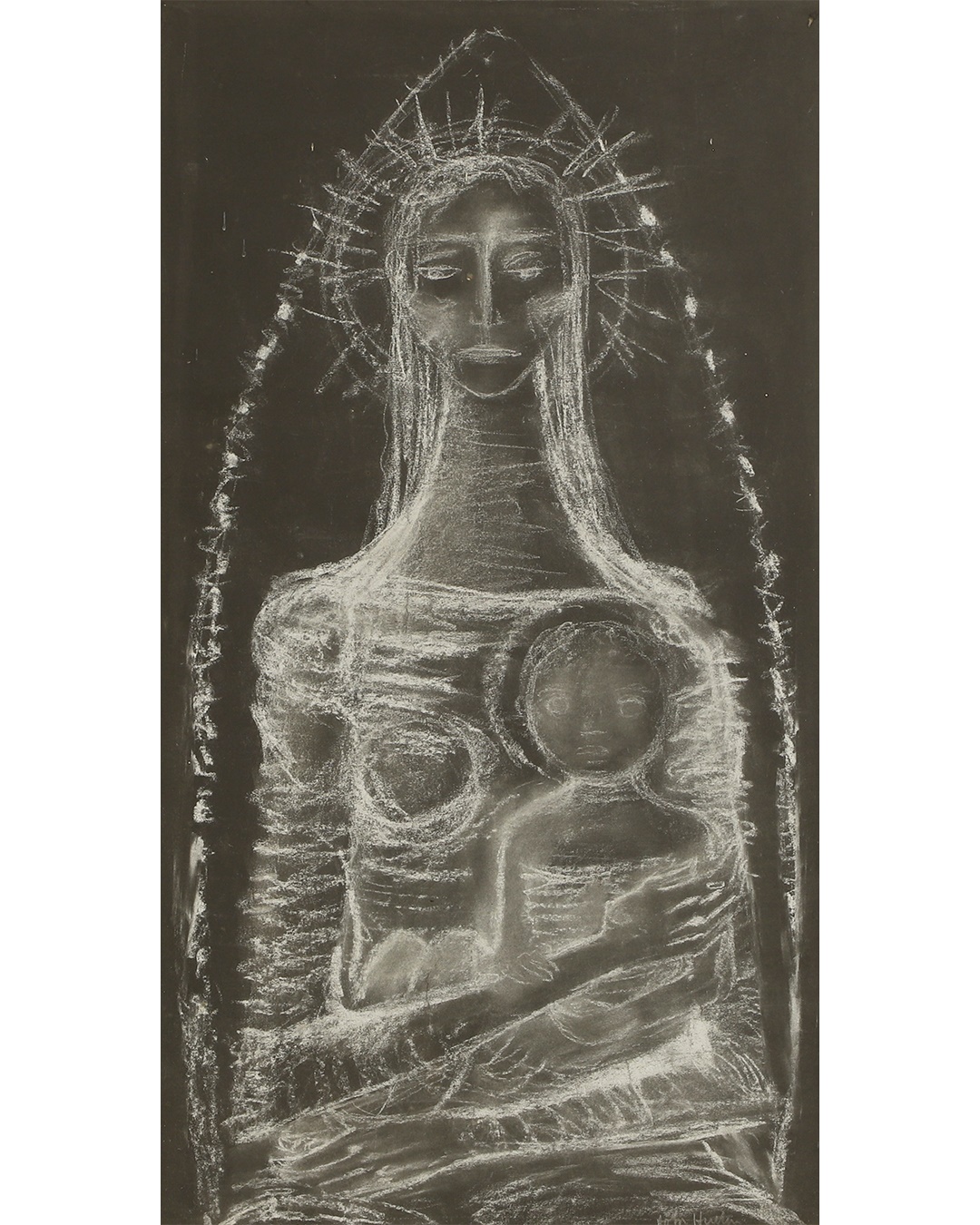
▲ John Hutton (New Zealand-British, 1906-1978), Mother and Child (Sold for £1,560, inc. fees | Lot 388, Paint. Print. Sclupt. - 02/12/25)
As Hutton’s distinctive engraving technique gained recognition, his existing connection with Basil Spence proved significant. Spence, who was responsible for the design of Coventry Cathedral following its destruction during the war, commissioned Hutton to create what would become his most important work: the Great West Screen of Coventry Cathedral. Positioned at the entrance to the Cathedral, the screen is 70 feet high and contains 66 clear glass panels. Hutton hand-engraved each of these to depict figures of stylised saints and angels, whose forms were modelled on his and his wife's bodies.
The Great West Screen of Coventry Cathedral serves a dual purpose as both a spatial boundary and a window, creating a visual link between the Cathedral and the ruins outside. From within the Cathedral, the glass frames the preserved ruins, offering visitors a reminder of the building's history. This architectural element embodies the notion of its rebirth following wartime destruction.
More than a poignant reminder of what was lost during the war, the glass screen creates an interactive relationship between the viewer and the artwork. From the exterior, the glass reflects the viewer in front of the image of Christ depicted on the interior altar tapestry, visually merging their presence with the sacred image. In this way, the screen becomes more than a decorative feature; it takes on a symbolic role, drawing each viewer into the artwork and allowing their reflection to become part of the visual experience.
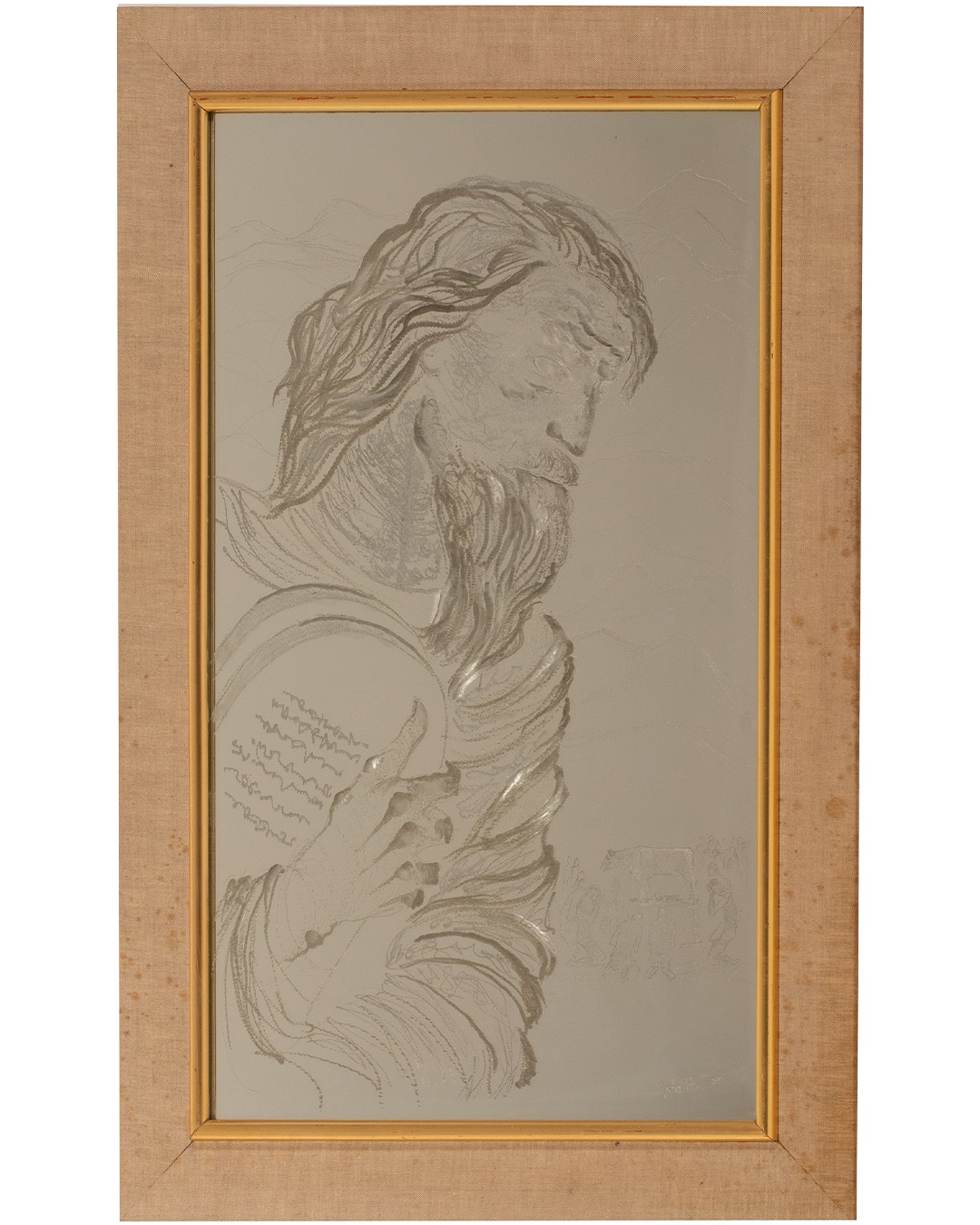
▲ John Hutton (New Zealand-British, 1906-1978), Moses, (£1,000-1,500, to be sold in our 13 October The Glass Sale auction)
By 1975, glass engraving had become established as an important form of modern architectural art, and Hutton became the first Vice President of the British Guild of Glass Engravers. His appointment reflected the growing recognition of the medium and the remarkable illusion of depth he achieved through his innovative technique, most notably in his Coventry Cathedral masterpiece.
The significance of the West Screen to Hutton was both artistic and deeply personal. Following his death in 1978, his ashes were laid to rest beneath the Coventry West Screen, further demonstrating the profound connection he held with what he regarded as his most significant work.
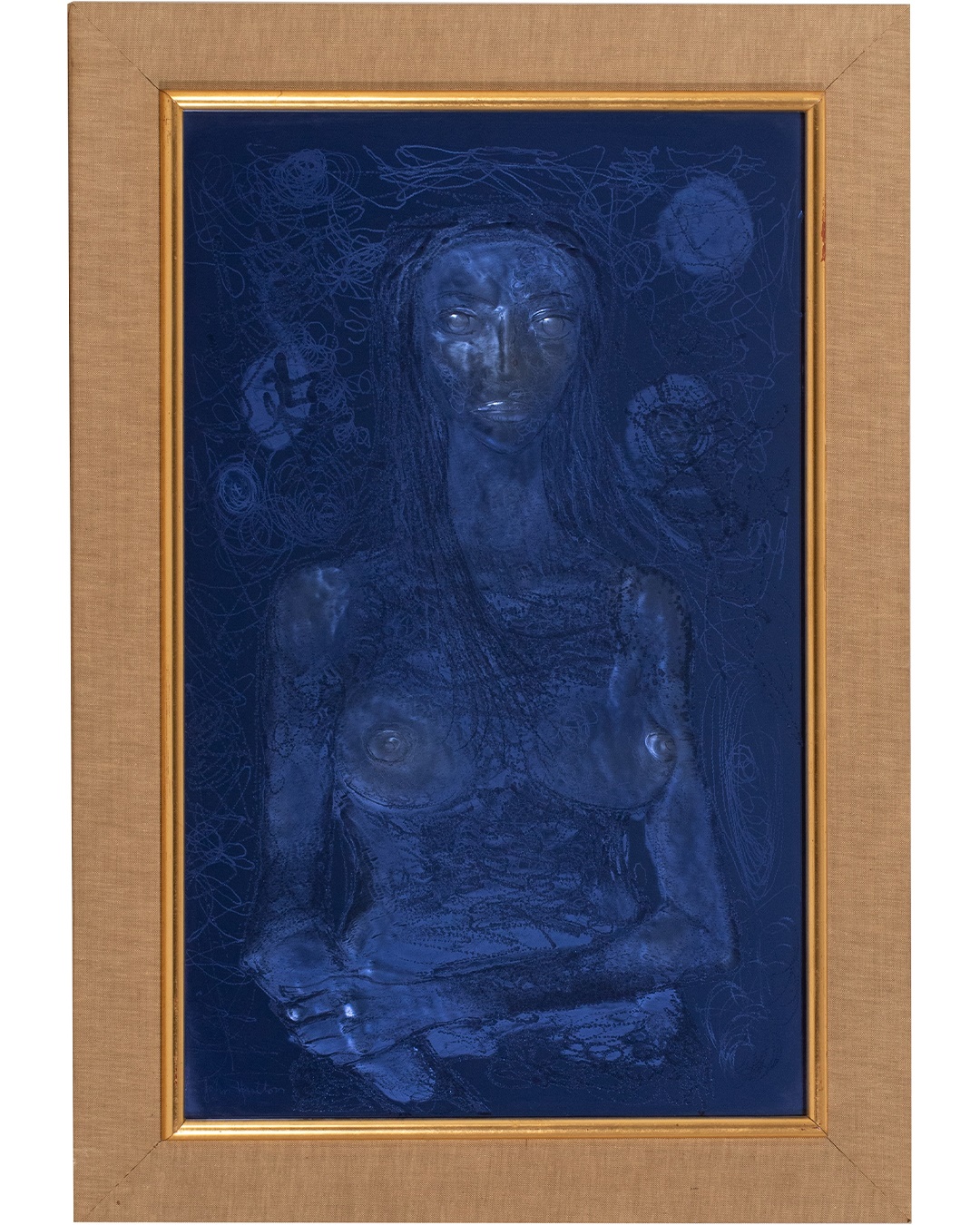
▲ John Hutton (New Zealand-British, 1906-1978), Nude, circa 1970 (£1,500-2,500, to be sold in our 13 October The Glass Sale auction)
Our upcoming auction, The Glass Sale, taking place on Tuesday 13 October, presents a fantastic private collection of John Hutton works. Amongst the collection is a particularly unusual example of John Hutton’s engraving on coloured glass (Lot 267), with the mirrored blue glass panel depicting a stylised nude figure.

alexfroggatt@sworder.co.uk | 01279 817778

A collection of Georgian silver flatware offered in our 22-28 September Open House sale provides a tangible link to one of the most memorable figures in the history of Eton College: Dr John Keate, Headmaster from 1809 to 1834.
23 September 2026
Our 13 October auction, The Glass Sale, presents a fantastic private collection of John Hutton works.
23 September 2026
In anticipation of our forthcoming auction 'The Glass Sale', we take a closer look at post-war Czech glass and the series of glass fish designed for Exbor.
23 September 2026