
We are proud to present 'The John Mitchell Collection of Military Horology', starring in our Open House sale, live for browsing and bidding from Tuesday 18 - Monday 24 August.
12 August 2026
BROWSE CATALOGUE REQUEST A VALUATION CONTACT A SPECIALIST
This remarkable collection of military wristwatches, including some of the fabled ‘Dirty Dozen’ manufactured during World War Two; along with pocket watches, aircraft instruments, naval clocks and horological items, was collected by John Mitchell.
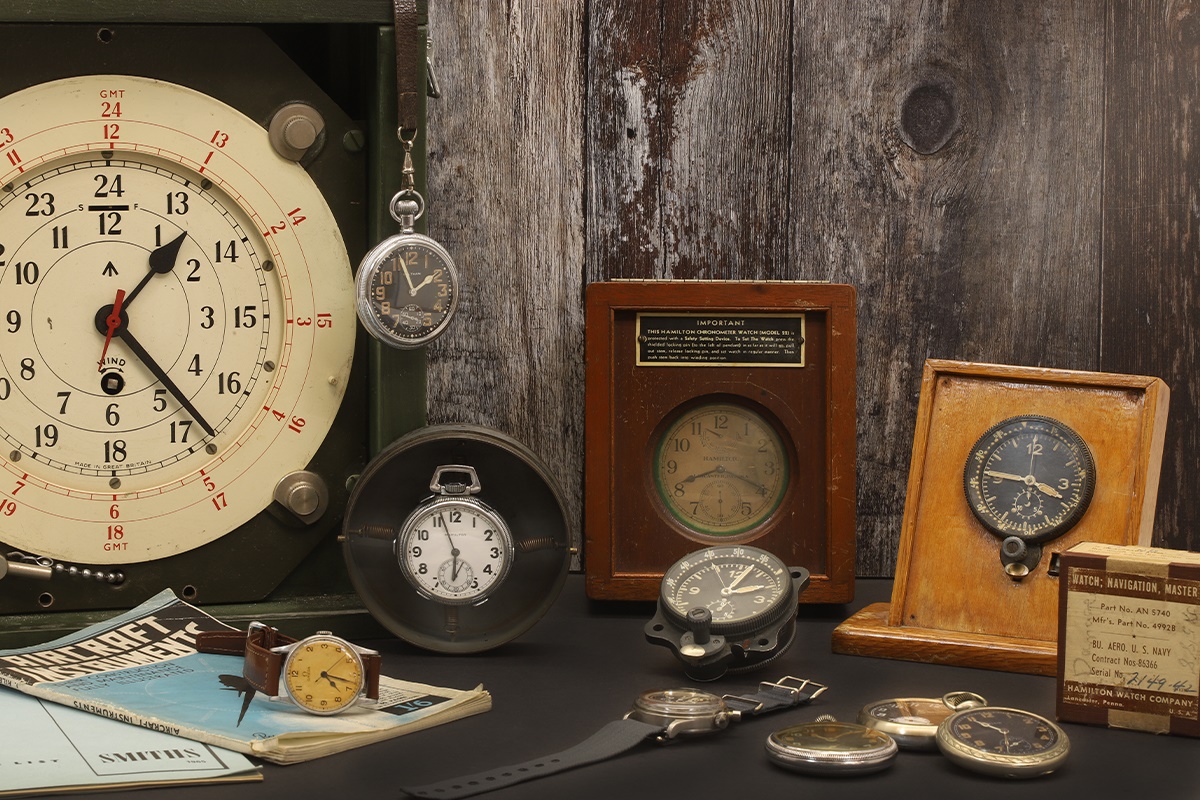
The John Mitchell Collection of Military Horology
John was born in London in 1935 and grew up during the Blitz. He first became a cadet in the Air Training Corps whilst at secondary school, and later joined the London Transport engineering staff and attended Enfield Technical College as a mechanical engineering student. He served his national service in the Royal Air Force, mostly in the Egyptian Canal Zone between 1953-1955.
What began as a hobby in collecting antique clocks and restoring some of the dials, developed into a deeper interest in military horology; with John going on to write several articles on the subject for the Society of Military Horologists.
His occupation for many years prior to retirement was managing the computer distribution and supply group at University College London. Once retired, he was an active member, and eventually Chairman, of the Suez Canal veterans. John campaigned for over fifty years to gain official recognition for the British troops who served in the Canal Zone. Finally, in 2003 Prime Minister Tony Blair’s government granted the General Service Medal with the Suez Canal zone clasp to qualifying veterans who served between 1951 and 1954.
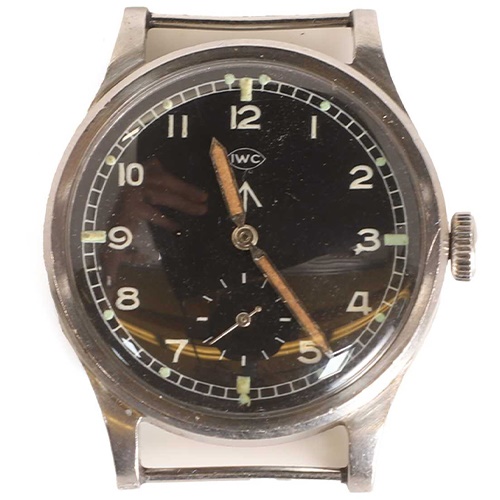
An IWC WWII stainless steel British military-issued ‘Dirty Dozen’ mechanical watch head, 1940s (£1,200-1,800)
Within this collection there are eight examples of the ‘Dirty Dozen’ wristwatches. These watches were created in response to the British military’s need for reliable field watches during World War II. Prior to this, soldiers often relied on personal or civilian watches, which varied in accuracy and durability. The Ministry of Defence sought a standardized, robust timepiece that could withstand the rigours of battle, including mud, rain, and extreme conditions, while remaining precise and legible. These watches were intended to replace the earlier Army Trade Pattern (ATP) watches, issued in 1939.
Twelve Swiss watchmakers were commissioned to produce these watches: Buren, Cyma, Eterna, Grana, Jaeger-LeCoultre, Lemania, Longines, IWC, Omega, Record, Timor and Vertex. The W.W.W. engraving on the back of the case, standing for 'Watch, Wrist, Waterproof', makes these watches instantly recognisable. They have become highly collectable, especially amongst those interested in British military history.
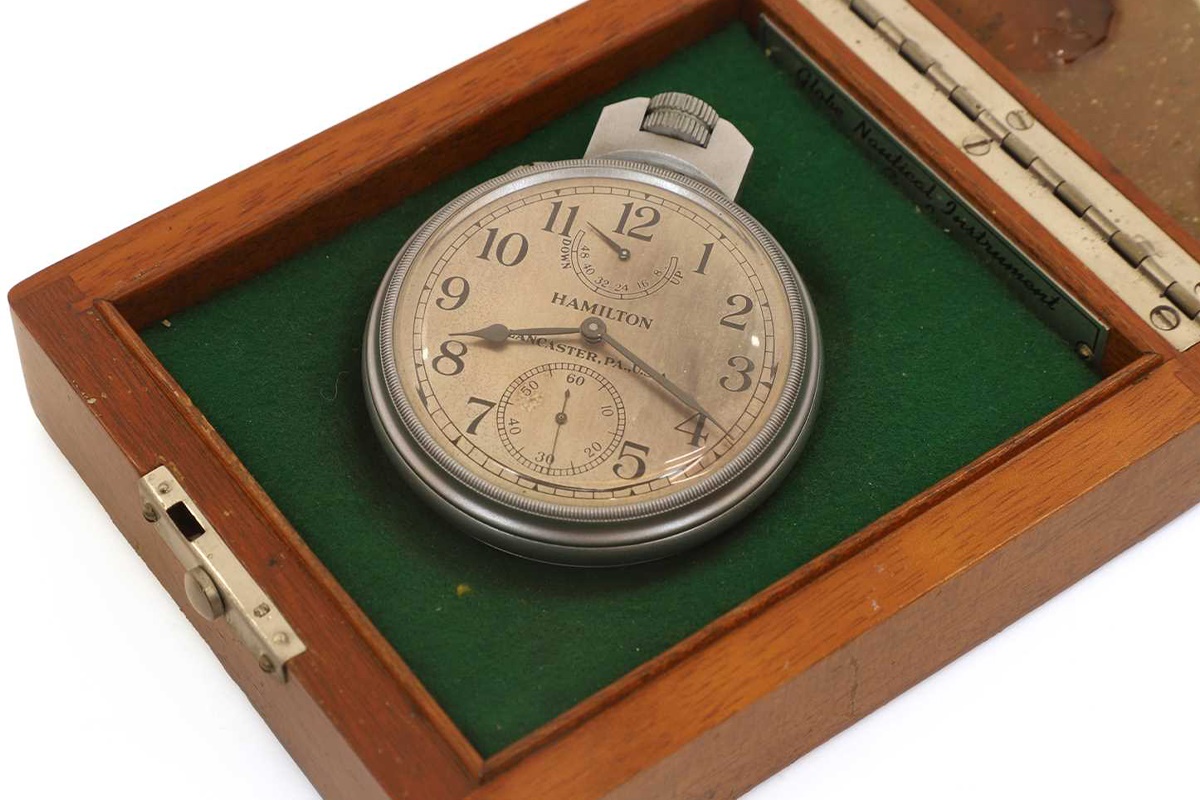
A WWII US Navy 'Model 22' deck chronometer, 1940s, by Hamilton Watch Company (£800-1,200)
Within the collection there are examples of British, US and German deck watches. Given that we are reliant on the Global Positioning System nowadays, in World War Two and in the decades after the war, before the advent of GPS, the navy’s needed a precision watch, that could be used at sea to transfer Greenwich Mean Time from the ship’s marine chronometer to the officer taking a celestial observation on the open deck. To determine a ship's longitude, a navigator needed to know the exact time at Greenwich at the moment of observing the sun or stars. A deck watch error of four seconds corresponds to a longitude error of one nautical mile at the equator. The deck watches therefore needed to be accurate, consistent, and robust. Many of these deck watches are among the most accurate portable timekeepers ever made. Also among the collection's highlights are several RAF and German cockpit clocks, made to be mounted within cockpits, and as accurate as the marine examples.
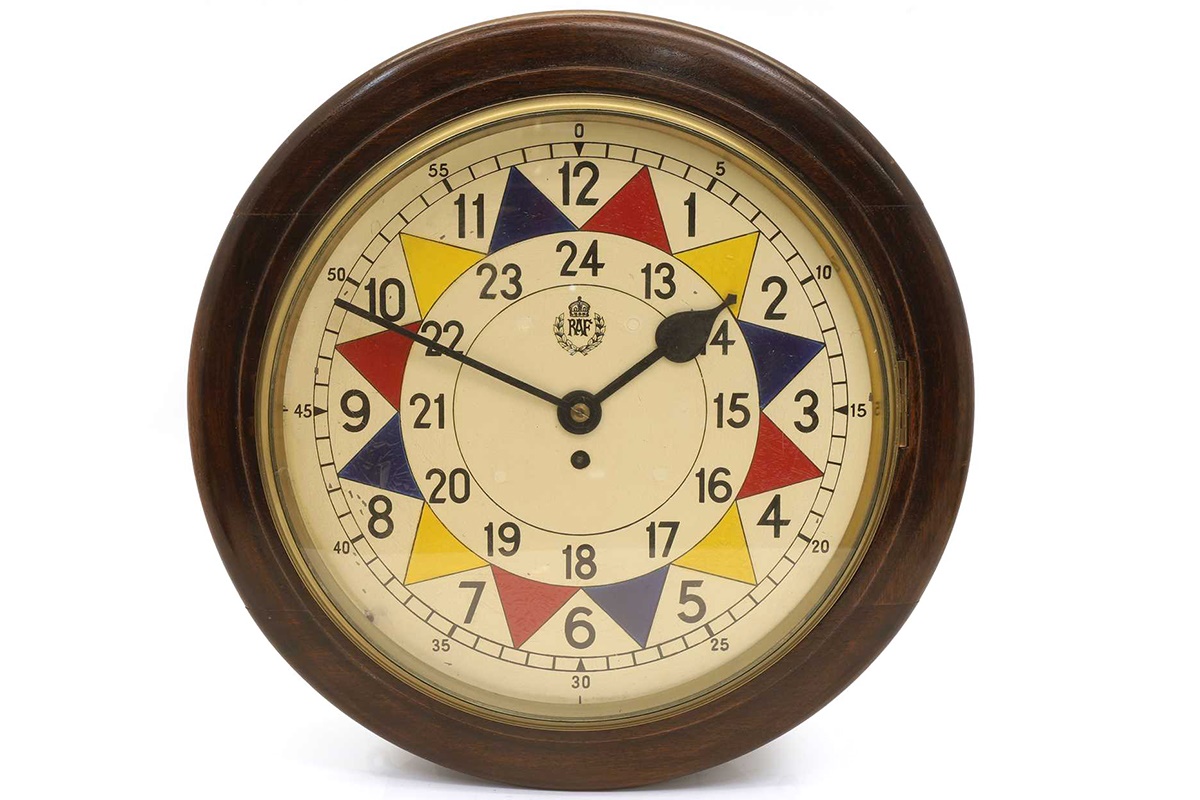
A WWII RAF operations room sector wall clock, 1940s (£1,500-2,000)
The World War Two RAF operations room sector clock is another well collected and rare item from the collection. These are also known as a ‘colour change clock’, whose primary purpose was to log the time of aircraft sightings and facilitate rapid plotting of enemy and friendly aircraft on large operational maps, forming a key part of the Dowding system, Britain’s integrated air defence system. The clock face was divided into triangular segments, each representing five-minute intervals, and coloured red, yellow, or blue in a repeating pattern. The outer ring displayed a 12-hour dial, while an inner ring showed a 24-hour dial, allowing precise time recording. When an aircraft was spotted, observers would note the colour of the triangle beneath the minute hand at the moment of sighting. This colour was then used to mark counters or flags on plotting tables, indicating the age of the information and helping controllers assess its tactical relevance.
This collection of Military Horology, presented within an excting and varied sale, features in our 18-24 August Open House timed auction.
Viewing is available at our Stansted Mountfitchet Auction Rooms at the following times:
Wednesday 19 August | 10am-3pm
Thursday 20 August | 10am-3pm
Friday 21 August | 10am-3pm
Monday 24 August | 10am-3pm
openhouse@sworder.co.uk | 01279 817778
Sworders are delighted to be presenting contents from the personal collection of the celebrated art collector Doris Lockhart Saatchi in our autumn auctions.
24 September 2026
A collection of Georgian silver flatware offered in our 22-28 September Open House sale provides a tangible link to one of the most memorable figures in the history of Eton College: Dr John Keate, Headmaster from 1809 to 1834.
23 September 2026
Our 13 October auction, The Glass Sale, presents a fantastic private collection of John Hutton works.
23 September 2026