
Many collectors of art and antiques will be familiar with the name of James Thursby-Pelham (1869-1947) and the celebrated collection in our upcoming Fine Interiors sales is not to be missed!
2 June 2026
VIEW COLLECTION REQUEST A VALUATION CONTACT A SPECIALIST
Numerous pieces from his collection, including some of the lots presented here, were used to illustrate the landmark first edition of The Dictionary of English Furniture by Percy Macquoid and Ralph Edwards in 1924. The authors – widely regarded as the fathers of English furniture scholarship – sourced examples from great historic collections such as Badminton House, the Royal Collection, and Blenheim Palace, alongside those owned by the outstanding collectors of the day.
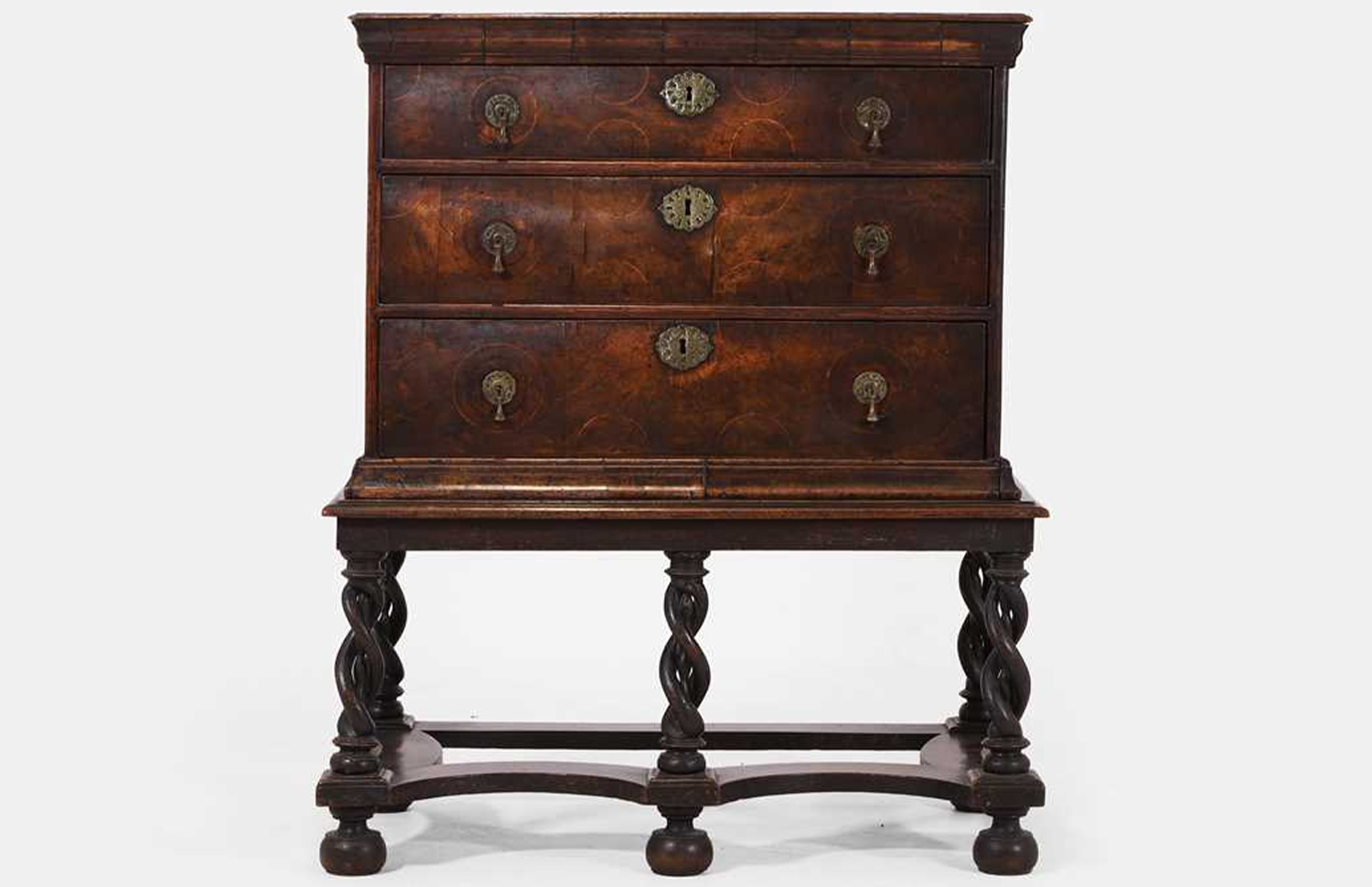
A Charles II walnut and sycamore-inlaid chest-on-stand, circa 1690 (£2,000-4,000)
Macquoid and Edwards were fortunate to receive guidance from the renowned furniture historian R W Symonds, who championed quality above all else. Symonds valued features such as dense, well-figured timber, sharp and assured carving, elegant proportions, originality, rich patina and attractive colouration, as highly as provenance itself. The collectors within his circle – among them Percival Griffiths, Lord Plender, J S Sykes, Herbert Rothbarth, Geoffrey Blackwell and Sir John Prestige – became closely associated with these ideals, and furniture carrying their provenance still commands careful attention from collectors today.
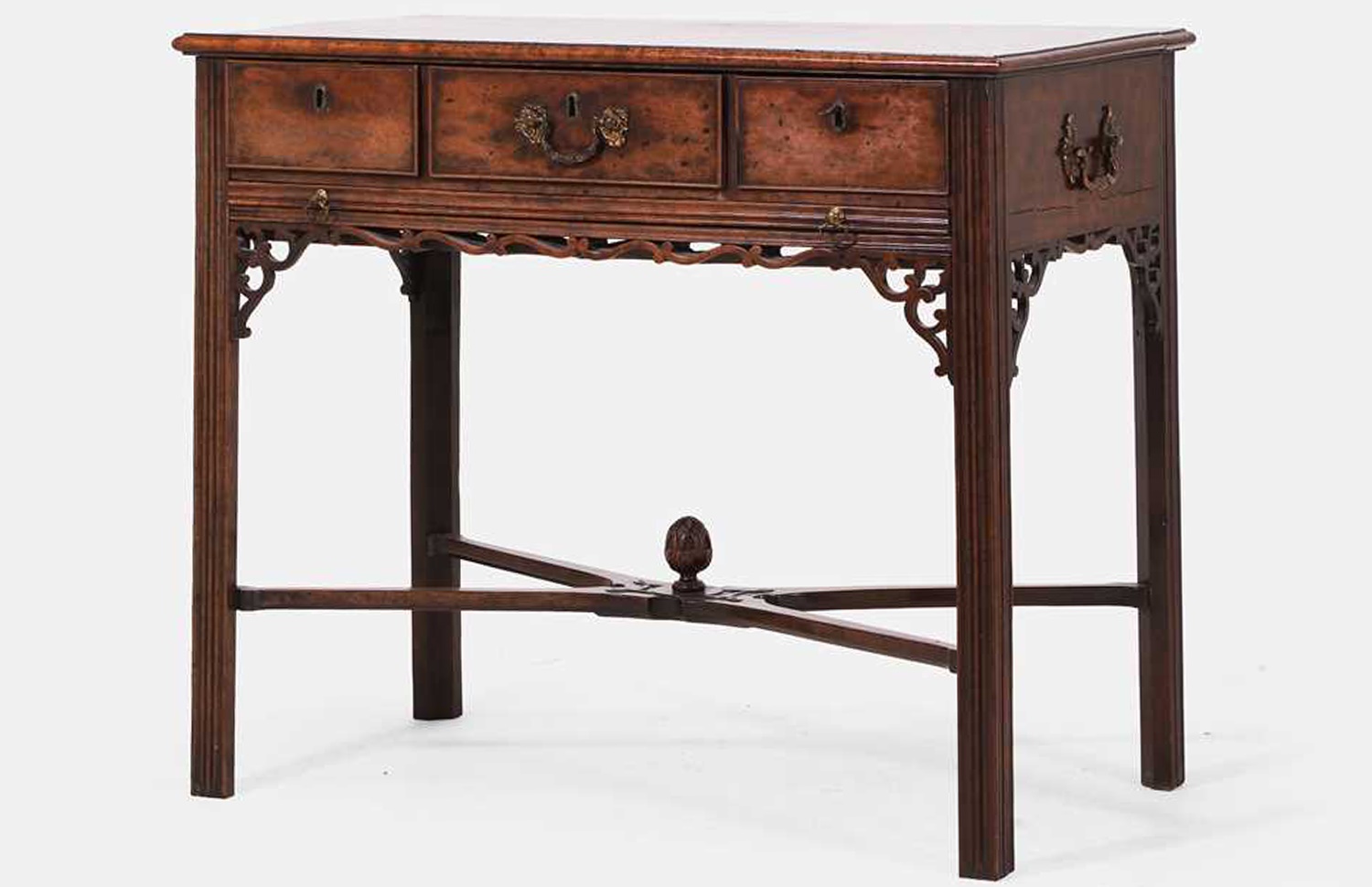
A George III mahogany metamorphic dressing table, circa 1760 (£1,000-2,000)
The collecting of English 18th-century furniture is, in historical terms, a fairly recent development, beginning in earnest in the final years of the 19th century, when interest in the furniture of Chippendale's era began to revive. The Victoria & Albert Museum had emerged from the design exhibitions of the 1850s, and the Arts and Crafts Movement advanced a modern, material approach that emphasised timber and craft. By the 1890s a number of books on historic English furniture had appeared. Adam Bowett has explained how it resurfaced as a valued and targeted collecting area at the close of the century: 'Rationally designed and of sound materials and craftsmanship, eighteenth-century furniture met all the requirements for modern living. Neither so bulky nor so uncompromisingly retardataire as Gothic, nor so flimsy and self-consciously "arty" as most Art Furniture, Georgian furniture was domestic in scale, comfortable to use, easy on the eye and widely available'. Oliver Brackett, writing in Country Life in 1923, put it more simply: English furniture, he argued, should be good to look at and fit for its purpose – the most elementary of laws.
Thursby-Pelham's family had lived in Shropshire since the 17th century – at Upton Cressett Hall before moving to Cound Hall, built for Edward Cresset in 1704. Surrounded by inherited furniture and paintings, he developed a strong appreciation for early oak and mid-18th-century mahogany. His Pelham ancestry may also have played a part: his ancestor Henry Pelham served as Britain's third Prime Minister from 1743 to 1754 and built Esher Place to designs by William Kent.
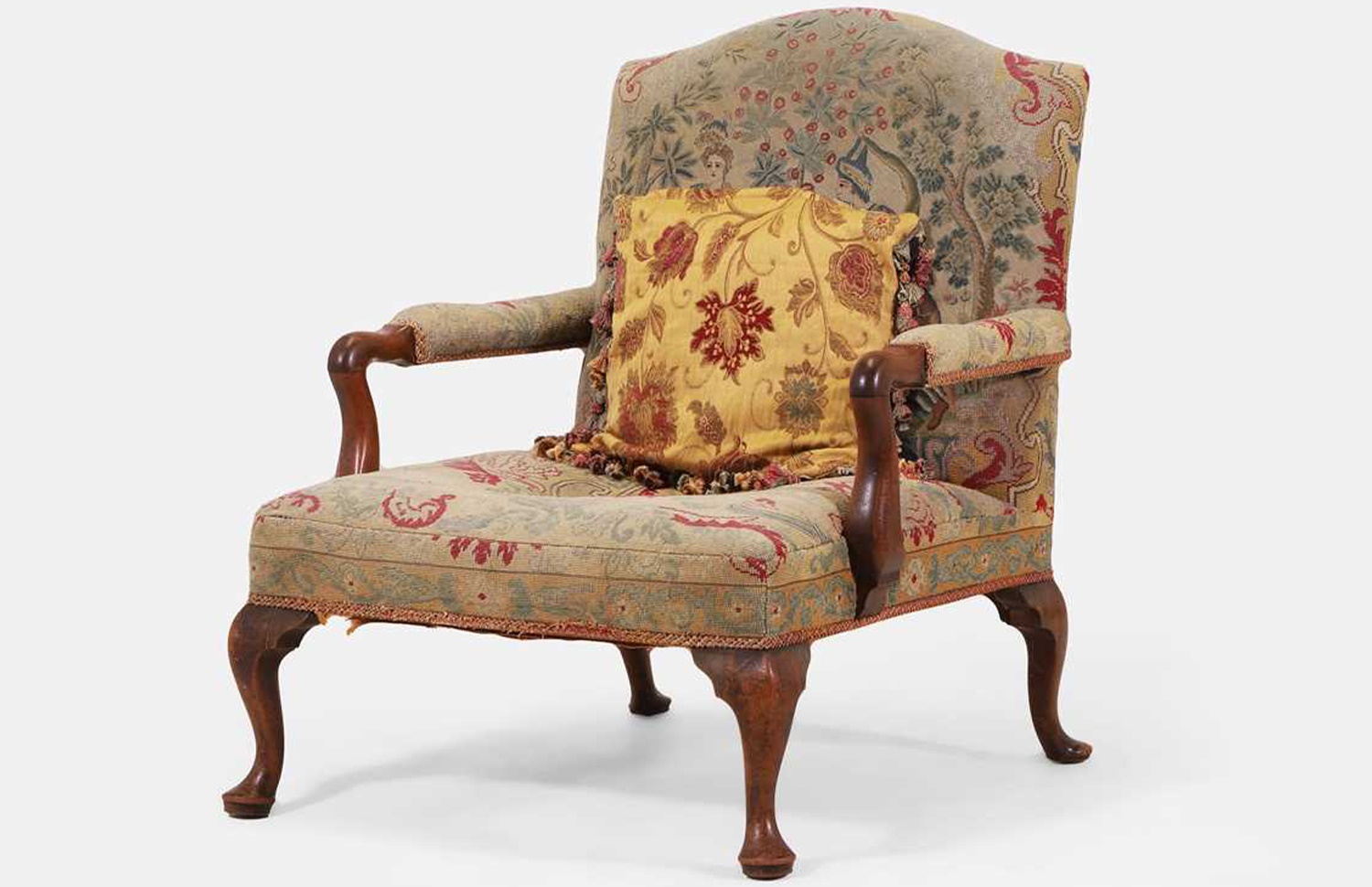
A George III walnut library armchair, circa 1770 (£1,000-2,000)
A number of celebrated collections from Symonds's circle were featured in Country Life, and Thursby-Pelham's was no exception. His collection was the subject of four articles by Oliver Brackett in March and April 1923, and a further piece by Margaret Jourdain in October 1925, each attesting to the exceptional quality of his holdings. His collection was also recorded privately in an album of photographs taken at his London house, 55 Cadogan Gardens, around 1920. The esteem in which individual pieces were held is perhaps best represented by the commode attributed to John Cobb – illustrated in The Dictionary of English Furniture – which was subsequently acquired by the Victoria & Albert Museum in 1937 (accession no. W.30-1937). Pieces were admired by fellow collectors too, among them Percival D Griffiths, whose celebrated collection was assembled at Sandridgebury, Hertfordshire.
Furniture continued to be bought and sold during Thursby-Pelham's lifetime, with further sales following his death in 1947. The present selection is the second sale by a descendant, following a group offered across three sales at Christie's in 2007. The tradition of specialist collecting was maintained when a splendid George III serpentine mahogany commode was sold at this time, realising £311,700 ('Important English Furniture', 22 November 2007, lot 640) and acquired by the late Aso O Tavitian; then re-sold as part of his single-owner collection at Sotheby's New York ('The Vision of Aso O Tavitian | The Townhouse', 8 February 2025, lot 1318).
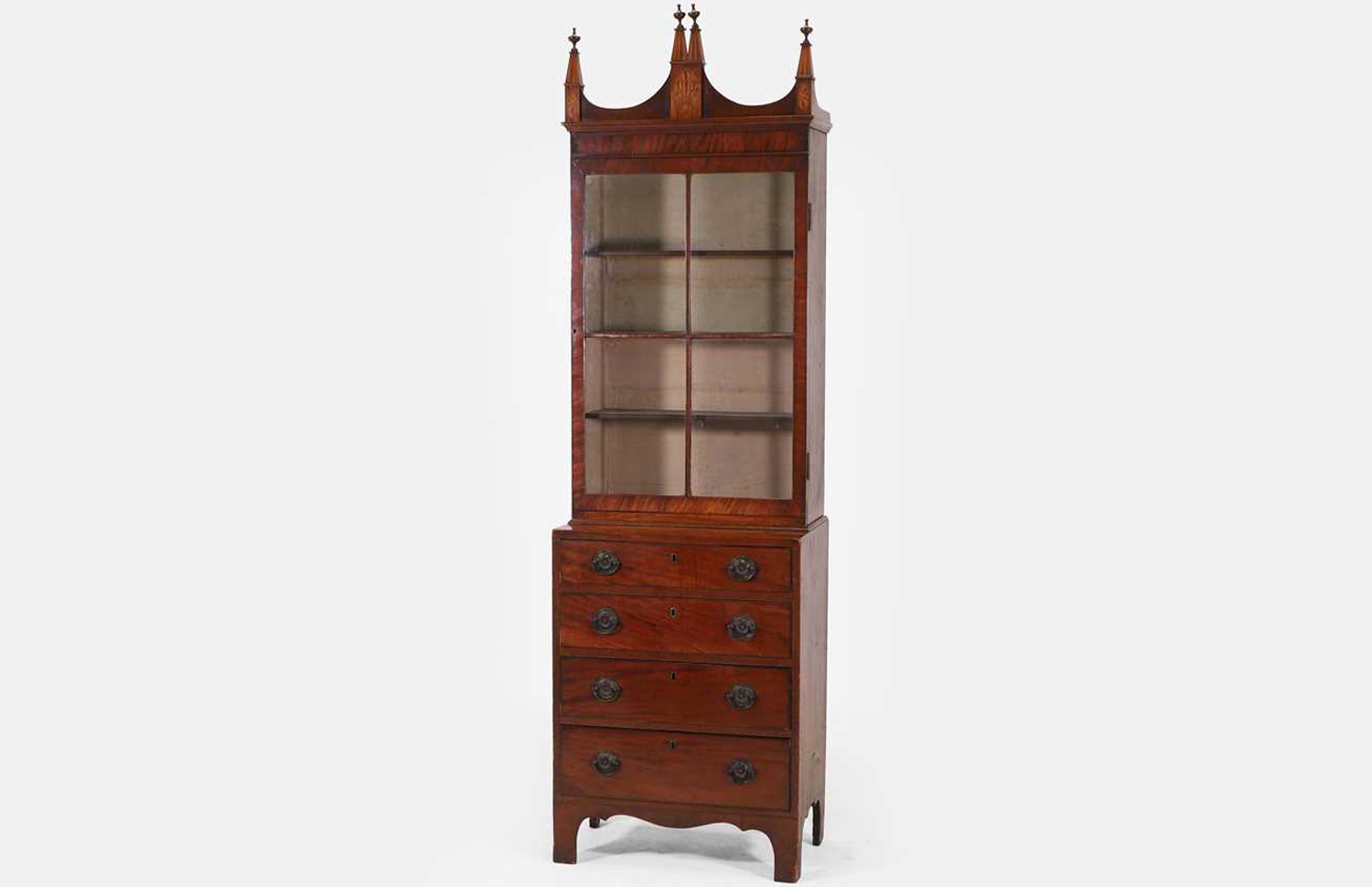
A late George III mahogany china cabinet, circa 1790 (£300-500)
The present selection brings together fine pieces dating from the Stuart to the Georgian periods, reflecting both the breadth and the sophistication of English cabinetmaking across two centuries. Offered with exceptional provenance, the collection presents furniture connoisseurs and collectors alike with a rare opportunity to acquire pieces from one of the most celebrated collections in the history of English furniture.
We are very grateful to Rufus Bird for his contribution in writing this piece.

fineinteriors@sworder.co.uk | 01279 817778

On Thursday 11 June we were thrilled to host a talk given by the incomparable Rufus Bird, staged at our London Gallery in Cecil Court.
3 July 2026
We are delighted to introduce The Simon Hilton Collection, a highly personal and wide-ranging sale taking place on Monday 27 July, at 10am.
We are thrilled to announce Madge Gill: The Arcana Drawings, a selling exhibition held at our London Gallery; open weekdays from Tuesday 21 - Friday 31 July.