
Here, close friend, art historian and former Senior Curator of Modern British Art at Tate, Andrew Wilson, offers an insight into James Birch’s remarkable collection and the extraordinary life behind it. Having known James since the late 1980s, Andrew has witnessed first-hand his restless curiosity, his friendships with artists and his instinct for the unusual.
15 September 2026
DISCOVER MORE REQUEST A VALUATION CONTACT A SPECIALIST
Since birth, art has provided James Birch with the co-ordinates of his life. His parents met at Chelsea School of Art – his father had been an architecture student and his mother an art student who had been taught by Henry Moore. Although James’s godfather was the renowned art historian and director of both the Victoria & Albert and British Museums, Sir John Pope-Hennessy, he had unofficial godfathers in the artist Denis Wirth-Miller (aka ‘Nanny Worth Millions’) and his partner the artist Dicky Chopping, who lived in Wivenhoe, nearby to the family’s weekend cottage at Fingringhoe, and would often visit with their close friend Francis Bacon, who also quickly became a firm family friend.
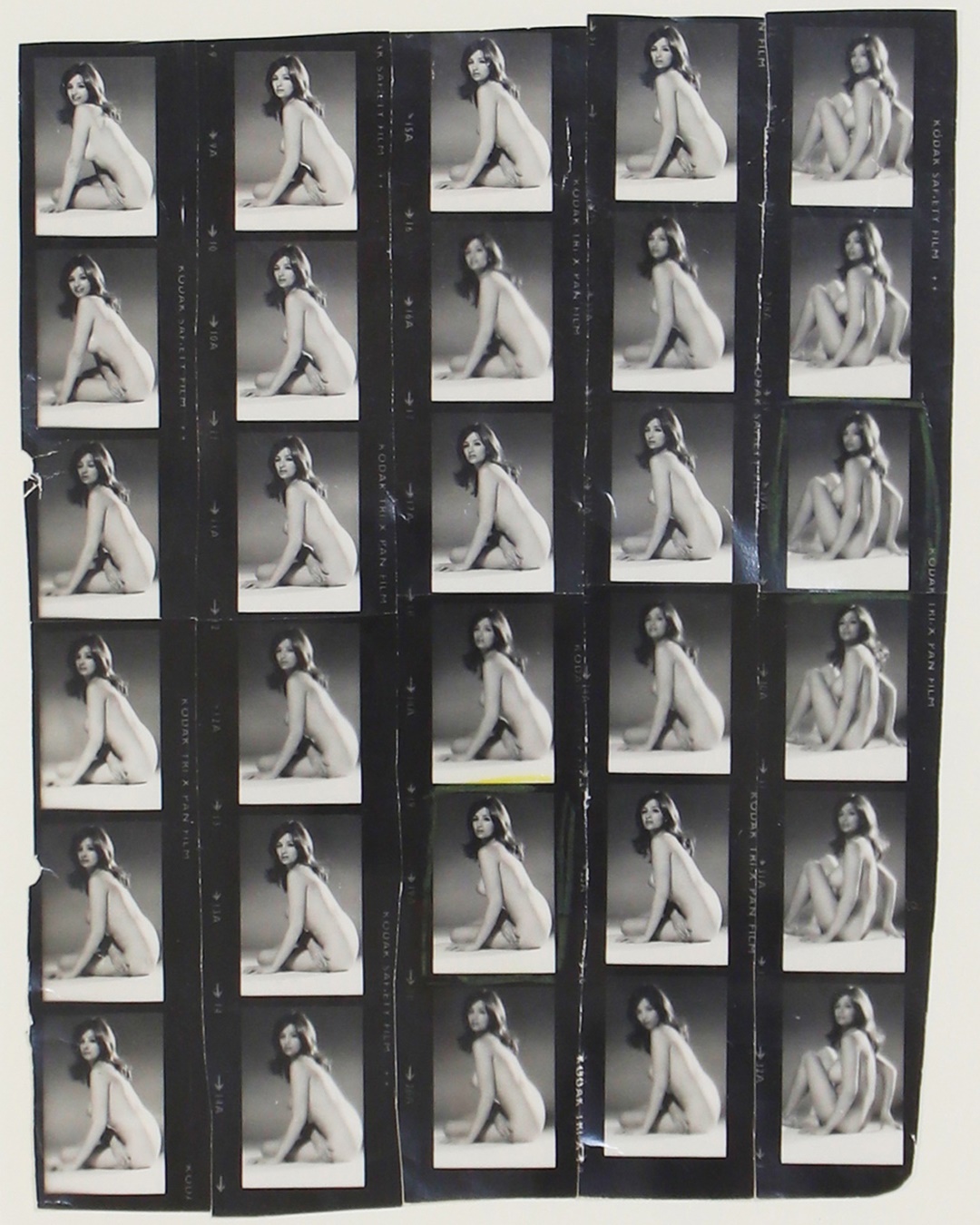
Lot 150 | ▲ David Bailey (British, b.1938) (£800-1,200)
In his book ‘Bacon in Moscow’, James brilliantly unlocks the way he organised the groundbreaking Francis Bacon exhibition in the Soviet Union of 1988, a time of glasnost and perestroika. The book begins with a photograph taken by Bacon of the angelic child-James in his bath – a child that Bacon later christened ‘Rawhide’ after James’s favourite TV western. So, at the start of his life, we see James growing up in the different worlds of art that he has continued to inhabit all his life. Acquainted with the establishment, he was, however, formed by an avant-garde spirit that pushed rebelliously against convention to upset that establishment, and recognised popular culture to be a potent artform; at Christie’s, where he first worked, he moved quickly from Old Masters to becoming the specialist in the new department for Rock ‘n’ Roll memorabilia. From these perspectives, his long interest in the 1963 Profumo scandal, Stephen Ward’s tragic involvement within it and his later friendship with Christine Keeler, makes perfect sense for what it said about the erosion of trust with the establishment, while also marking the beginnings of a media and sexual revolution. From his collection about this controversy, he made an exhibition at the Mayor Gallery in 2010, and the contact prints of Keeler by David Bailey and associated archives offered for sale here had been carefully retained by James until now.
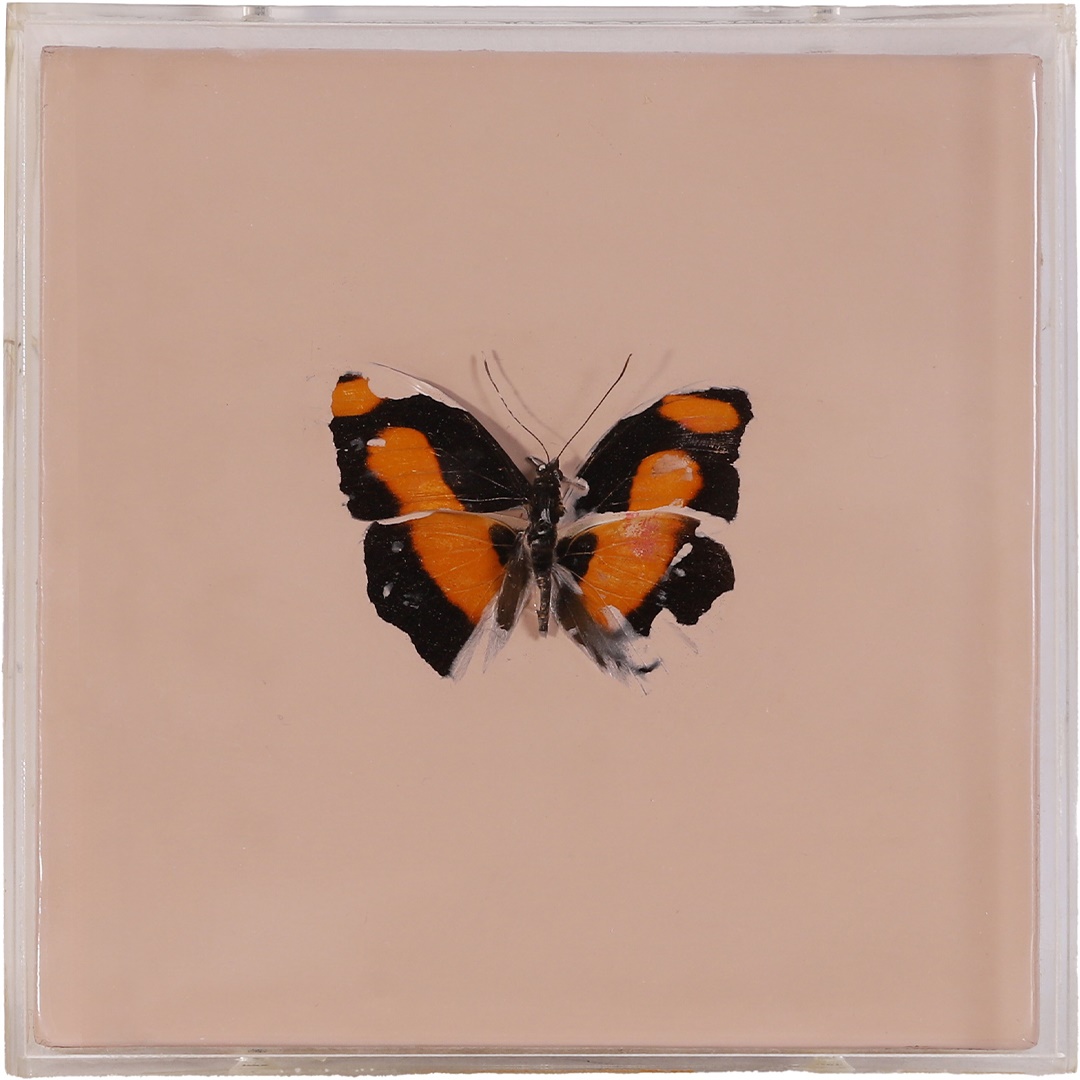
Lot 230 | ▲ Damien Hirst (British, b.1965) (£5,000-8,000)
As a teenager, James moved effortlessly among the worlds of style and punk, inhabiting a world that the style commentator Peter York described as a ‘mysterious aesthetic conspiracy’ where culture was not commodified but lived. In the 1970s and 80s, James passed through the mysteriously connected circles of the louche proto-glam style of ‘Them’ encapsulated by Andrew Logan, Duggie Fields (represented here by a strong group of works) and Bryan Ferry, as well as the visceral directness of punk – the Sex Pistols and Malcolm McLaren – and on to the post-punk New Romantics. In 1985, for instance, Nico, the singer with The Velvet Underground, found herself homeless, and after a gig with John Cooper Clarke at the start of the year at Dingwalls, James and Mary Lemley offered her a room in Fulham where she stayed with them for a year. Excited and provoked, James’s experience of these intersecting worlds, and close friendship with many of the artists involved, set the course of his life, framed by his extreme visual fascination and engagement with cultures that push up, against and over boundaries. Later, in the 1990s, occasionally without a gallery, he similarly embraced the energy of the young British artists typified here by his friends Damien Hirst and Keith Coventry – the latter’s white monochrome portrait of Jay Jopling catching the zeitgeist. It was also at this time, at the end of the 1990s, that I reintroduced James to Genesis P-Orridge (they had first met in 1983) just at the time that this pioneering performer had started reconfiguring their artistic activity towards pandrogeny, renaming themselves as Genesis Breyer P-Orridge as s/he and their partner Lady Jaye, Jacqueline Breyer, fused identities to become one pandrogynous plural being – James mounting an unforgettable exhibition in 2004 at his Clerkenwell gallery A22, which included the works also in this sale. Though a pioneering figure in the worlds of intermedia art, performance art, punk and industrial music in the 1970s and 80s, it is their work on identity at the end of their lives that continues to have direct contemporary resonance.
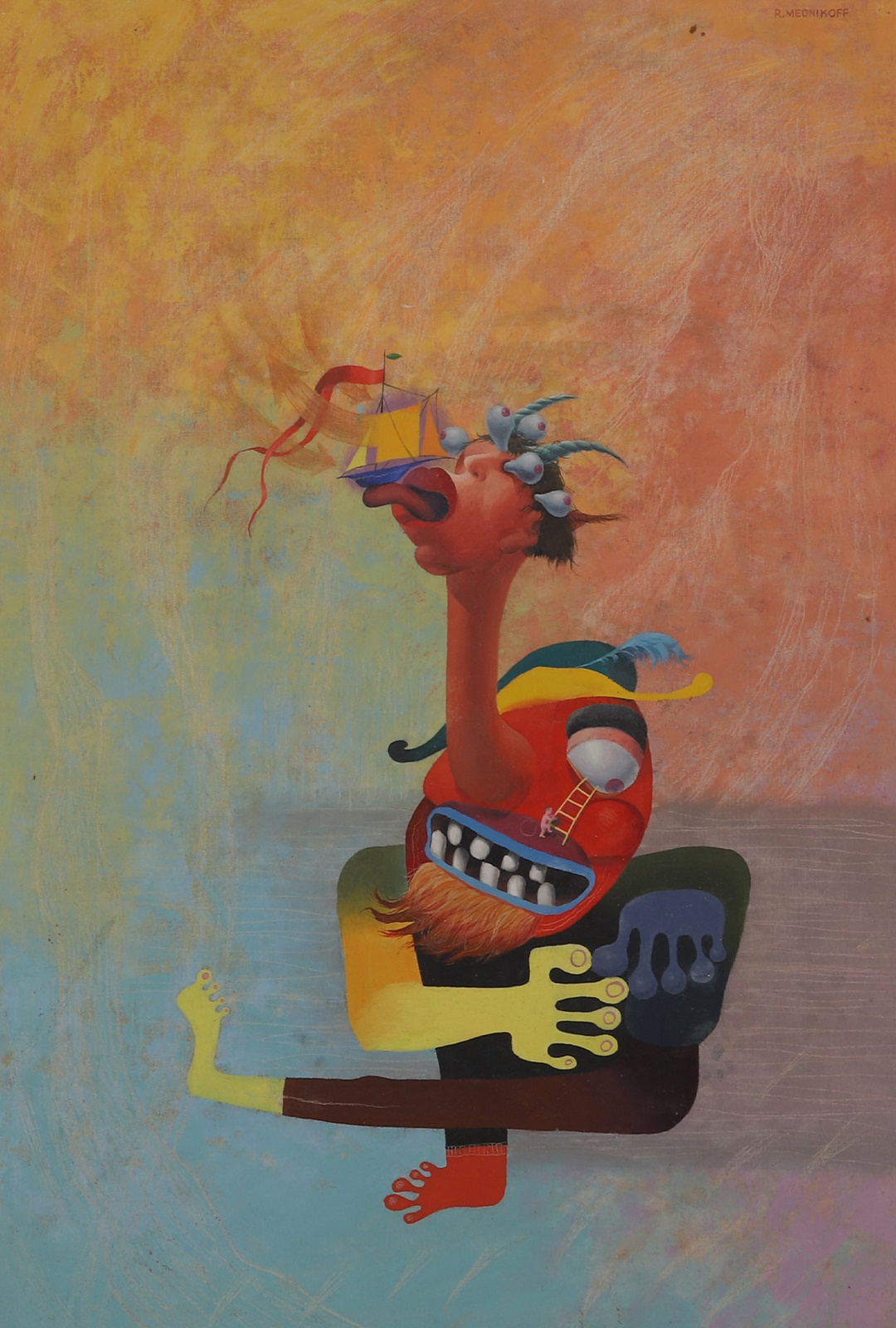
Lot 5 | ▲ Reuben Mednikoff (British, 1906-1972) (£25,000-35,000)
When James, not long after leaving Christie’s, set up his gallery in 1983 on Waterford Road, off the King’s Road, his first concentration was with British avant-garde art of the 1930s and 1940s – with an especial concentration on surrealism, playing a key role in reappraising many of these then largely forgotten artists. The first exhibition was of John Banting – framed by hand-painted banners by Annabel Grey (who had designed the mosaic hot-air balloons for Finsbury Park tube station the same year). The works in this sale by Reuben Mednikoff, Eileen Agar (including the terrific 1938 image of her by Joseph Bard as they ‘play photography’ sheltering from a storm in Knokke), as well as by Michael Vernon and Conroy Maddox, all provide memories of the beginnings of his first gallery. In his home, then around the corner from his gallery, and since the 1990s at his house and third gallery A22, both in Clerkenwell, James created environments that directly reflect his life in art. Many of the paintings, sculptures, photographs and drawings over time became personally charged objects, whether they had been bought by him, found or given to him. What he hung at home was quite distinct from gallery stock (though sometimes things had to be sold) – it was not a shop but his home, and things in it closely reflected his mischievous, life-affirming personality. However, over the last year he has set about a process of rationalising and decluttering. As a consequence, this sale now offers a chance for others to experience his excitement, while also providing him with some clear space to live within and develop new enthusiasms.
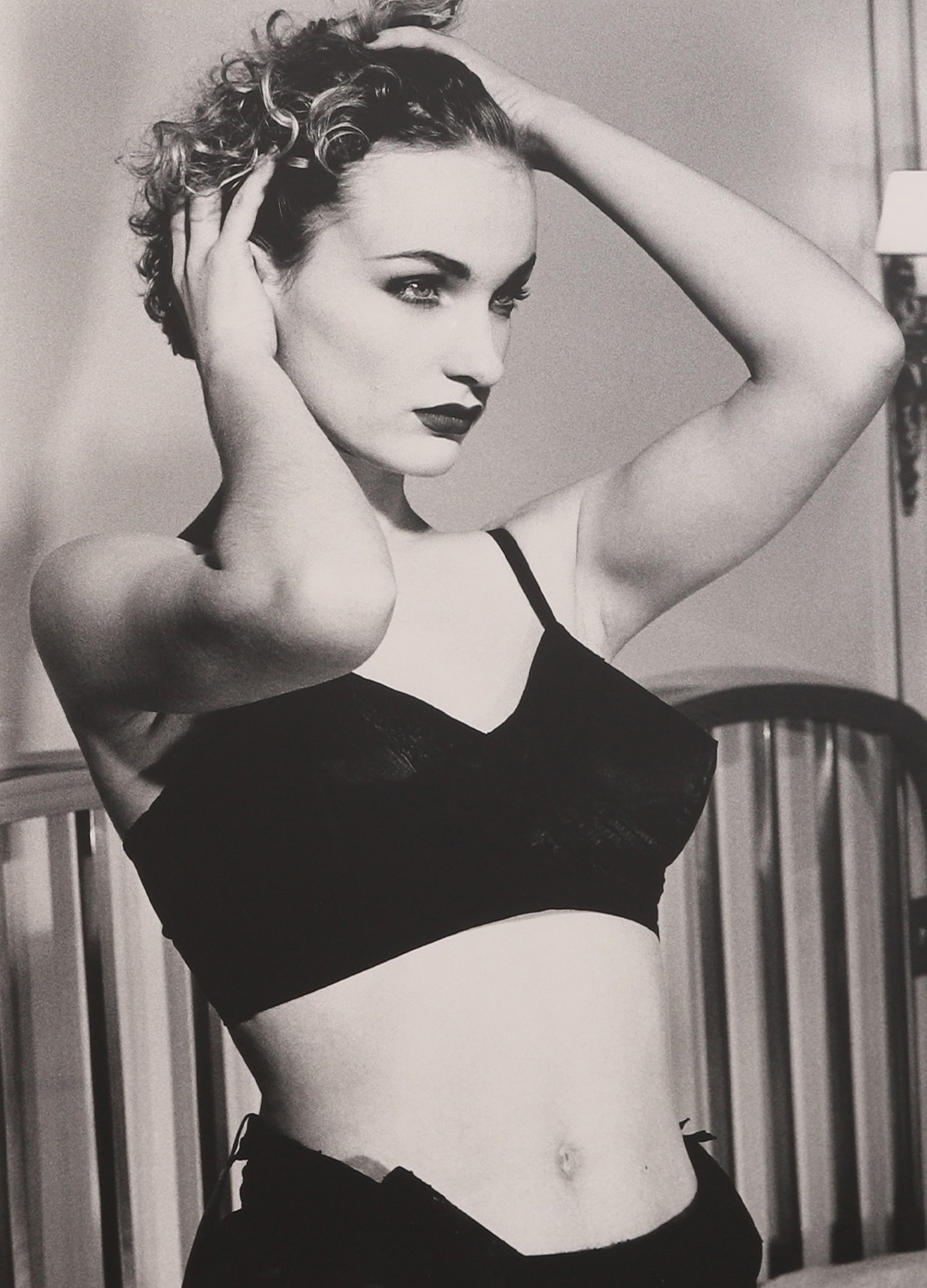
Lot 281 | ▲ Bettina Rheims (French, b.1952) (£800-1,200)
After starting with the surrealists, James showed a wide range of modern British and contemporary artists in his first gallery, and also at his second (in partnership with Paul Conran) in the late 1980s and early 1990s in Soho, walking distance from his alternative ‘offices’ of The Colony Room, The Groucho Club, and further down the road, The French House and then Jerry’s. It was at the Colony that James met Dan Farson, chronicler of Soho, but in the 1950s and 1960s, a photographer and TV personality. Photography has always been an obsession for James. He gave Farson an exhibition in 1988, rediscovering him as a photographer for a new generation, and this sale contains some of those prints as well as other photographs – mainly portraits – by David Bailey, Cecil Beaton, Ray Bellisario, Bob Carlos Clarke, Terence Donovan, John French, Angus McBean, Don McCullin, Bettina Rheims, Humphrey Spender, Nick Taylor, and Michael Wood, as well as striking images by anonymous photographers. ‘Striking image’ is a good way to think about much that is here – cherished by James not because it may be by this or that artist, but purely because of what it might reveal about the world in an arresting way, creating a power that niggles and grows ever stronger as you live with it. The sale is also suggestive of James’s acquisitive nature – however, these objects are not the result of a focused hunt, instead James is more of a passionate flâneur, open to the poetry of circumstance and the objects he finds at street markets, galleries, auctions and artists’ studios. The range of items in the sale attests to this spirit: from medical waxworks and death masks of Oliver Cromwell, William Blake, Stalin and Lenin, to African sculpture, a giant automated Swiss army knife, or the egg of an elephant bird, and much more (for many years James had a life-sized waxwork of Mao Tse-tung tucked around a corner by his front door). One rare public outlet for James’s private passions has been the annual Table-Top Museum held by the Art Workers’ Guild in London where he has displayed a range of obscure objects of fascination – the display of his collection of hairnets being one standout, and another, his collection of Yuri Gagarin artefacts.
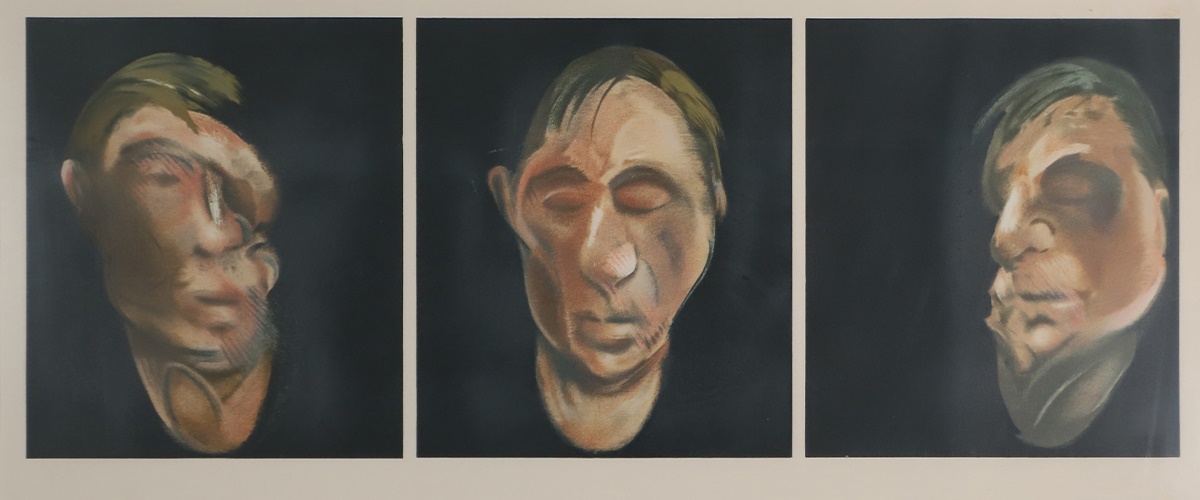
Lot 37 | ▲ Francis Bacon (British, 1909-1992) (£1,000-1,500)
The contents of this sale, like anybody’s home, provides not quite a catalogue, but a parallel memoir of a life being led – obsessions and beliefs as well as the effect of major events. To a wide audience, James is most often identified through the prism of three major exhibitions he pulled off in the late 1980s and early 1990s: Bacon in Moscow in 1988, Gilbert & George in Moscow in 1990, and then again in China (both Beijing and then Shanghai) in 1993, as well as his dogged, if unsuccessful, attempts to make similar exhibitions happen in North Korea, Cuba and Vietnam. The sale has documents and other artefacts reflecting this side of his life, from Bacon and Gilbert & George, as well as from Christo, Jeff Koons and others. James’s collection tells of the fascination he found for cultural imagery and propaganda while the paintings by his Russian girlfriend, Elena Kudiakova, depicting Soviet food and products in the spirit of advertising, provide a more homely melancholic flipside to the Soviet propaganda machine. Being both an artist and a jewellery and fashion designer, Elena also played a role in the preparation for Bacon in Moscow. Away from the international stage, James is most recognised for giving Sir Grayson Perry his first exhibitions between 1984 and 1990, and the sale includes a variety of works from this key early period in his career, including the plate Animal Love, 1984, and the sculpture Saint Diana (Let Them Eat Shit), 1984 – both from his first exhibition. Saint Diana encapsulates the transgressive spirit of much of James’s collection – a miniature version of the coronation chair at Westminster Abbey rendered both as a throne to shit (a commode) and as a reliquary dedicated to the cult of Princess Diana, who had recently married the then Prince Charles, and with the Stone of Scone replaced by a miniaturised pile of turds. Imagery of Diana (or is it early Claire - Grayson’s alter-ego?) covers the tiny throne.
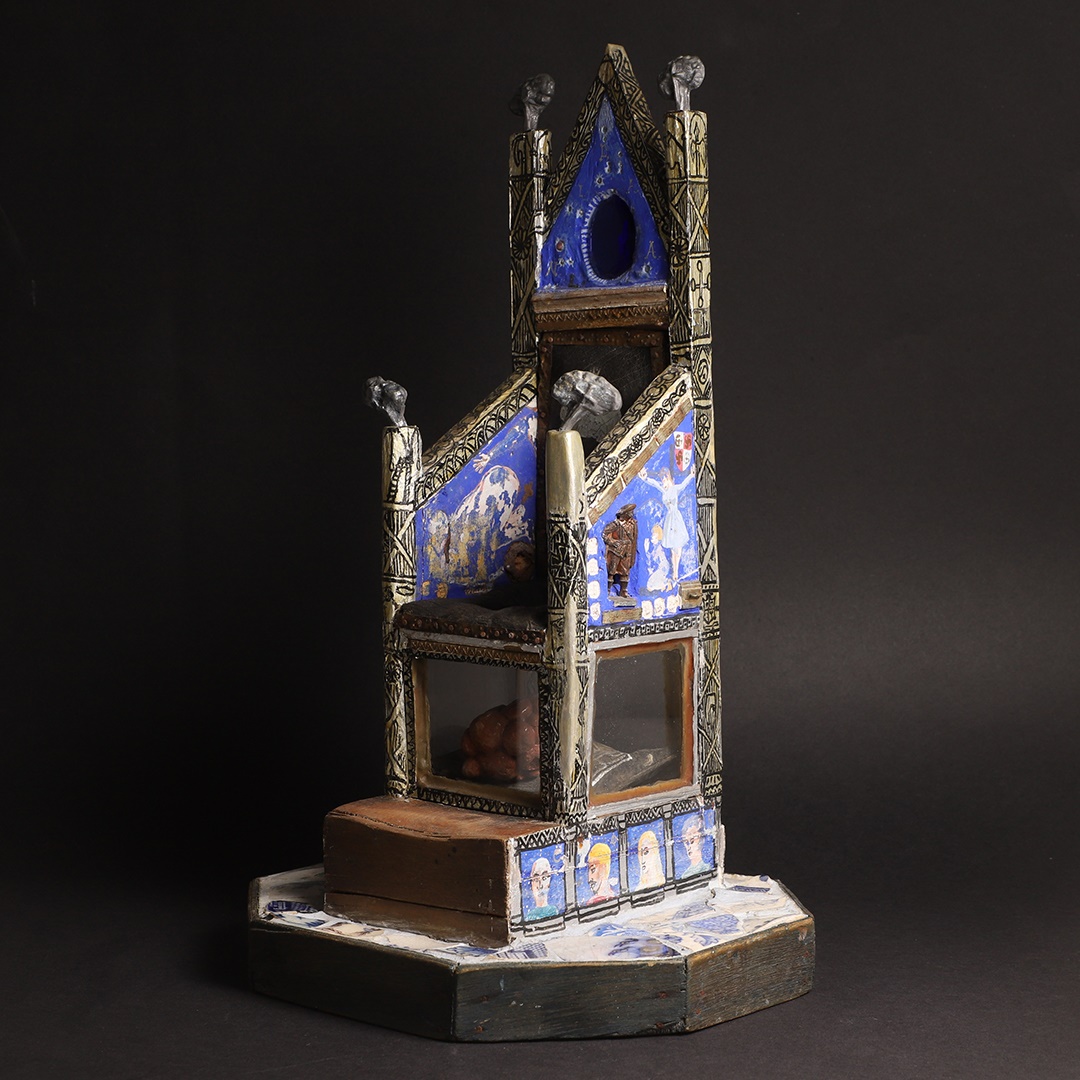
Lot 72 | ▲ Sir Grayson Perry RA (British, b.1960) (£40,000-60,000)
James had been introduced to Perry through Perry’s girlfriend Jennifer Binnie, a painter who, with her artist sister Christine (who had encouraged Perry to go to pottery evening classes) and artist Wilma Johnson, had since 1982 formed the Neo Naturist Cabaret. The performance group emerged out of the late-1970s and early-1980s club culture, something that James was very much a part of from the beginning (he had also been the driver for Adam and The Ants on their 1978 tour of England) – clubs like Billy’s, Blitz, St Moritz, The Cha Cha Club and Taboo. People didn’t dress to go out but dressed as a way of life. But instead of putting clothes on, the Neo Naturists put on body paint and enacted ritualised performances articulated by a Girl Guide camp outlook. They brought the visions of William Blake and Samuel Palmer, Cecil Collins and Neo-Romanticism of the 1940s into direct collision with New Image Painting and Neo-Expressionism, the world of Haysi Fantayzee’s song ‘John Wayne is Big Leggy’ and the clubland post-punk New Romanticism. It is no accident that for the last exhibition at his Fulham gallery, James enrolled one of the last surviving British surrealists, Conroy Maddox, to body-paint the three Neo Naturists, who then made body-prints on to long rolls of paper – Jennifer’s body print being included in the sale, as also are some of her paintings as well as a group of Christine’s ceramics.
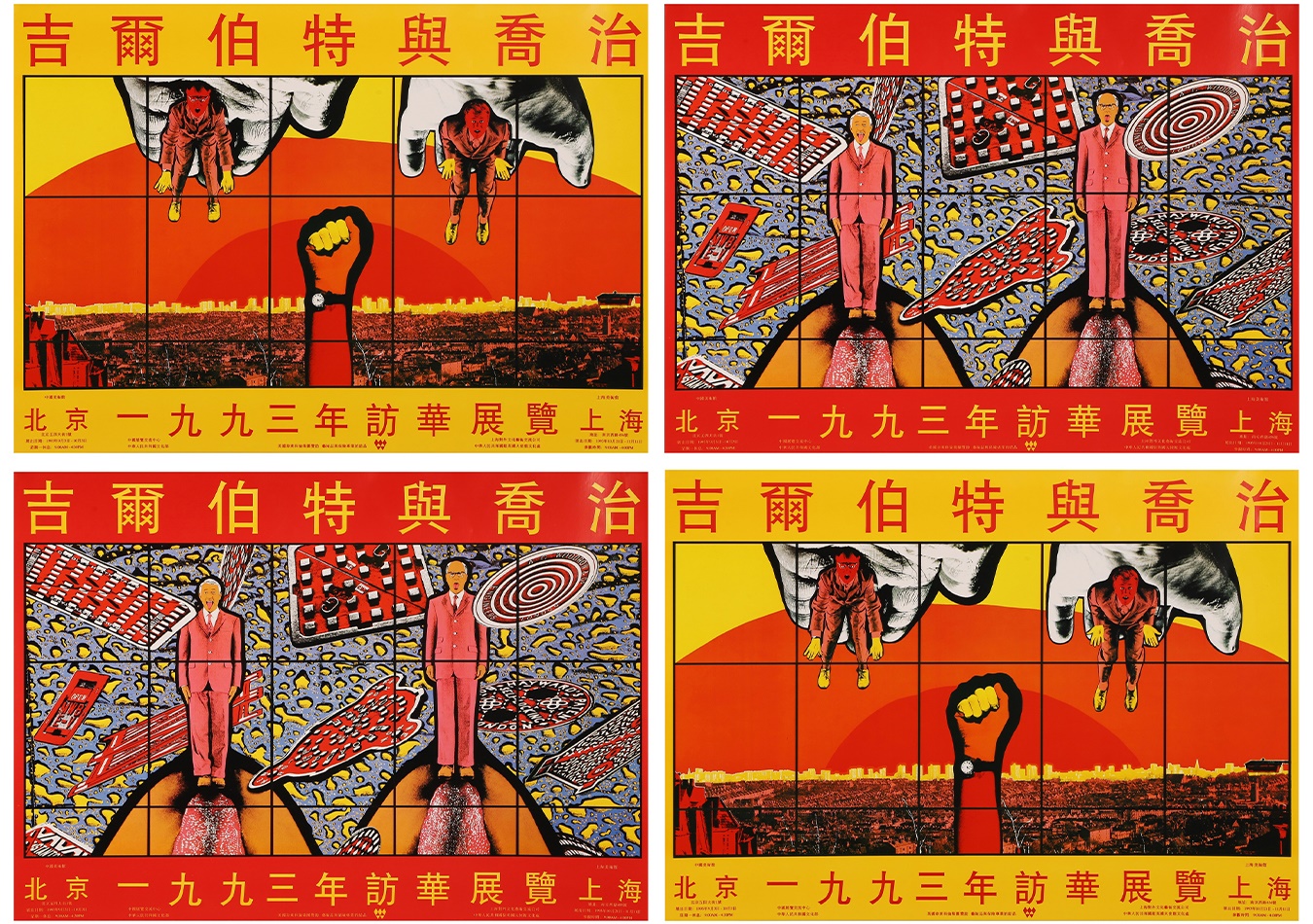
Lot 188 | Gilbert & George (British, b.1943 and 1942) (£200-400)
Alongside Binnie and Perry, another notable artist James worked with at both his galleries was the poet and artist David Robilliard, a close friend of Gilbert & George’s, whom James had met first at the Blitz nightclub, where Robilliard worked with his partner, the artist Andrew Heard. Robilliard’s drawings and poems (with Conran, James published monthly poem cards by him) directly portray the sensibility by which Gilbert & George also described him as ‘the new master of the modern person. Looking, thinking, feeling, seeing, bitching – he brilliantly encapsulates the “Existers” spirit of our time’. Robilliard’s portraits in word and line celebrate the fun of life, even when faced by the darkness and devastating despair of AIDS, always reminding us that, as he exclaimed: ‘Life Isn’t Good. It’s Excellent’.
Andrew Wilson
 TO INCLUDE THE JAMES BIRCH COLLECTION
pictures@sworder.co.uk | 01279 817778

Here, close friend, art historian and former Senior Curator of Modern British Art at Tate, Andrew Wilson, offers an insight into James Birch’s remarkable collection and the extraordinary life behind it. Having known James since the late 1980s, Andrew has witnessed first-hand his restless curiosity, his friendships with artists and his instinct for the unusual.
15 September 2026
Discover the story behind two rare photographs of Martin Luther King Jr. and Lal Bahadur Shastri, exploring their historic meeting in London, and the significance of the original colour film.
8 September 2026
Through a compelling series of photographs, this exhibition shines a light on The HALO Trust’s work in communities affected by conflict, capturing both the danger of landmine clearance and the hope that follows when land can be safely used again.
3 September 2026