
The term ‘Company School’ refers to a genre of painting that emerged in India in the late 18th and 19th centuries, flourishing under the patronage of British East India Company officials, their families, and other European residents in India.
28 August 2026
CONSIGN NOW REQUEST A VALUATION CONTACT A SPECIALIST
The East India Company was originally formed by a group of colonial merchants who sought to challenge the monopoly of trade that Spain and Portugal had long maintained in the East Indies. At the end of the 16th century, they were granted a royal charter by Elizabeth I that would give an exclusive right to voyage to the East Indies and conduct trade.
A trading post was eventually established in Surat with the approval of the Mughal emperor Jahangir in 1613, which gave them limited use of land and resources in exchange for European goods. The EIC’s ships carried treasures such as tea, fine cotton textiles, silk, spices, indigo dye, saltpetre, and porcelain - imports that profoundly transformed British tastes and homes. By the late 18th century, the imperial power of the Mughals was in rapid decline following the death of Emperor Aurangzeb, whose long reign had placed considerable strain on the empire’s resources. The lack of a strong central authority after his death (further weakened by the succession struggles and factional rivalries) led to a gradual disintegration of the empire he had forged and ruled with an iron fist, which, as a result, led to the rise of British power in the region and ultimately, the foundation of the British Raj.
During this period, many officials of the EIC and their families relocated from England to India. As they travelled through the country, encountering unfamiliar flora and fauna, communities, and beautiful ancient monuments, they recorded these experiences by commissioning indigenous artists to paint them. The resulting works combined the rich tradition of Indian paintings with the naturalistic techniques of the West and became known collectively as ‘Company’ paintings. Typically executed in watercolour on paper or ivory, these works diverged from the traditional gouache used in Indian miniature painting. They incorporated Western techniques such as tonal modelling and linear perspective to suggest depth, while still retaining distinctly Indian features like fine detailing and rich, vibrant colour palettes. Common subjects included portraits of local people, such as artisans and everyday workers, as well as scenes of festivals, occupations, Hindu epics, and caste-specific dress.
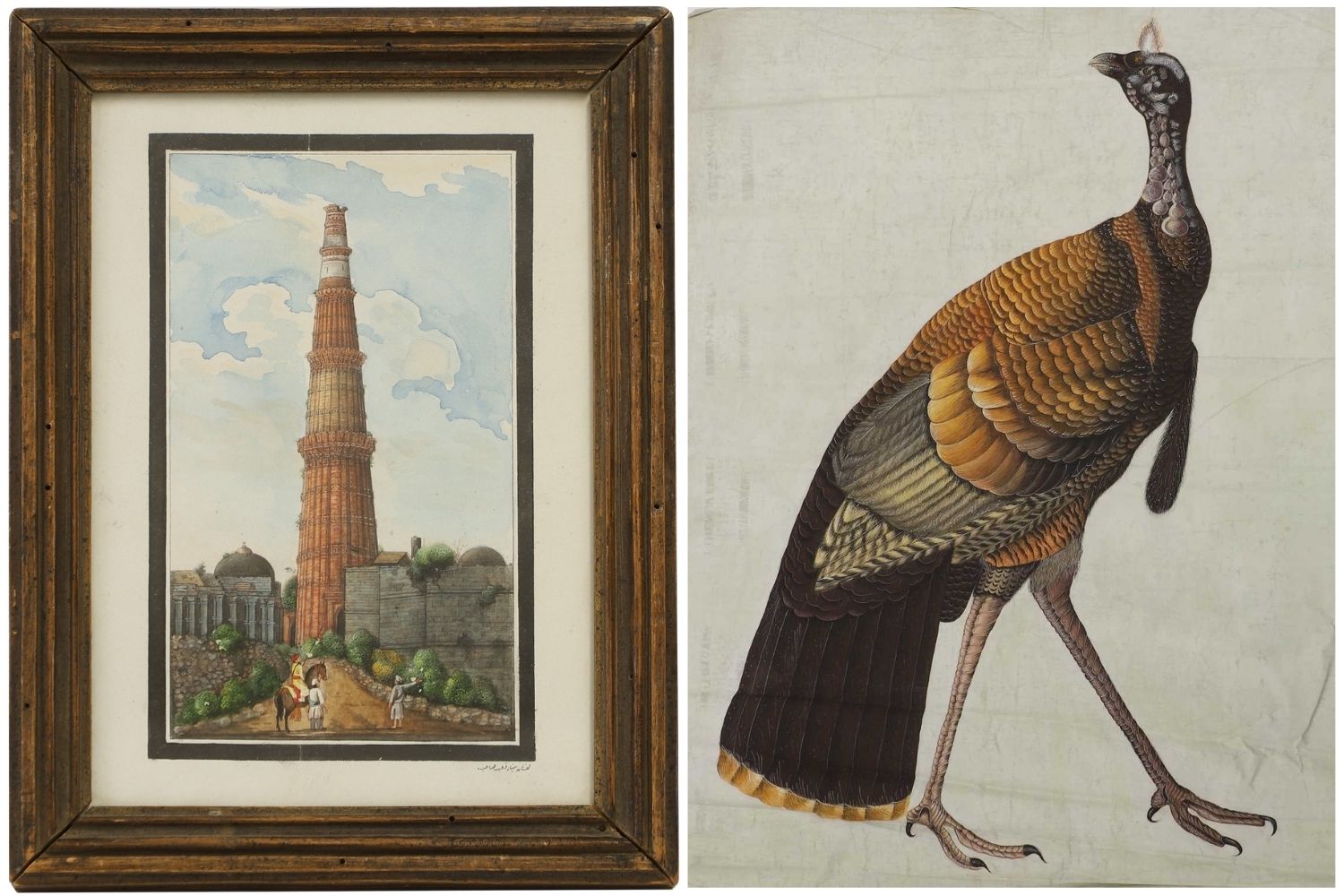
Left: An Indian painting of the Qutb Minar, late 19th century, Delhi, Company School (Sold for £416 - inc. fees) | Right: A large painting of a wild turkey, late 19th century, Company School (Sold for £1,820 - inc. fees)
Some of the most compelling examples come from a handful of well-known collections: the Impey, Fraser, Metcalfe, and Parlby albums. Each offers a slightly different lens on life in India during a time of major political and cultural change. The Fraser Album, for example, commissioned by James Baillie Fraser and William Fraser between 1815 and 1820, comprises over ninety watercolours created by Indian artists depicting the people of India in striking detail. In a recent Christie’s sale, a selection of works from a master of the Fraser circle achieved exceptional results, with one painting selling for £1,880,000 against an estimate of £500,000–800,000. The remarkable precision with which Fraser artists recorded their subjects has ensured that these works remain important visual documents for understanding Delhi and its surroundings in the early nineteenth century.
By the late 19th century, however, enterprising Indian painters had begun producing standardised sets of popular subjects that could be sold to any traveller visiting India’s major attractions. These sets often depicted a vibrant mix of monuments, festivals, social castes, occupations, or traditional costumes from across the subcontinent.
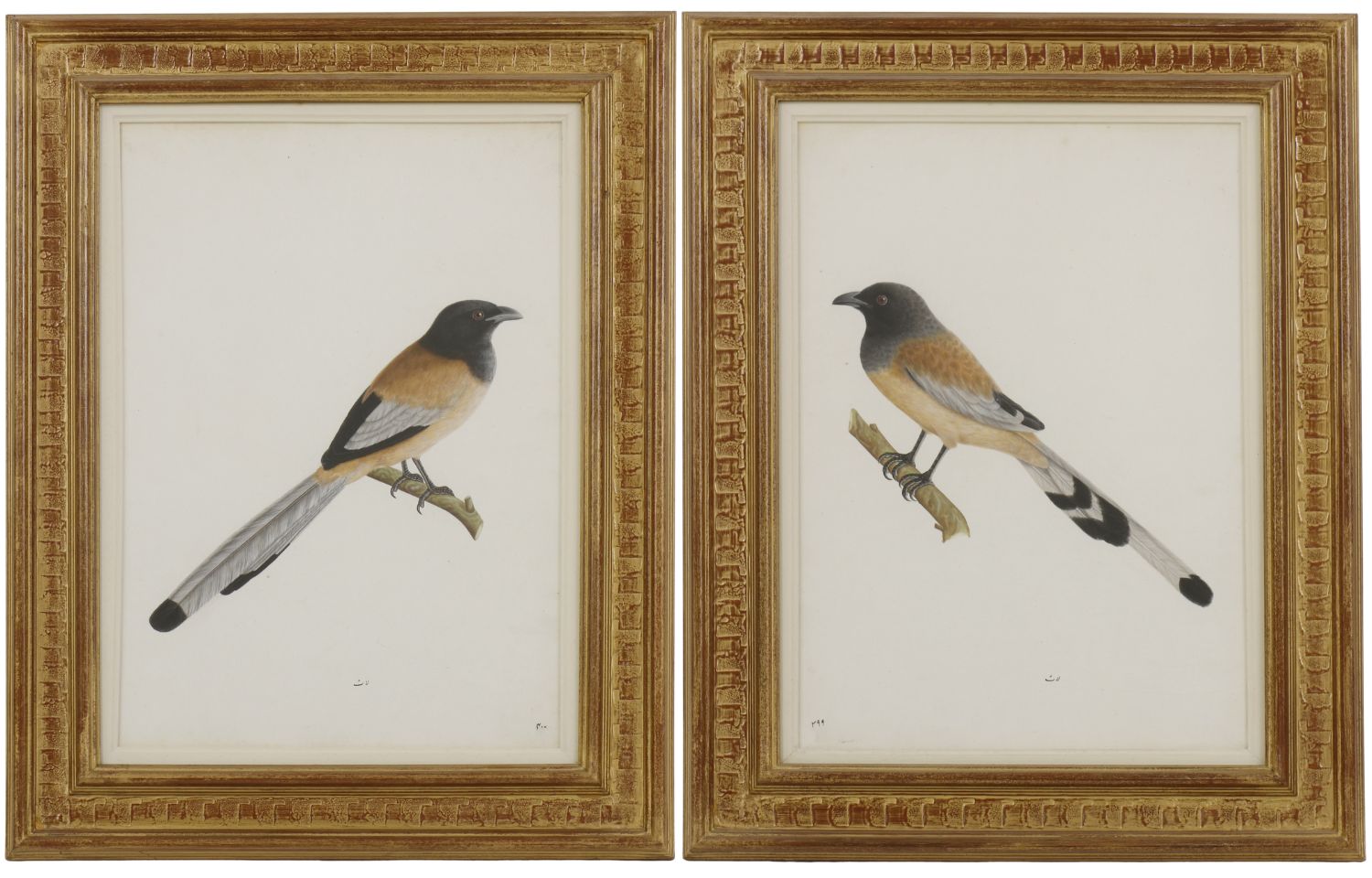
Calcutta School, c.1800, A pair of Indian tree pies (Sold for £33,800 - inc. fees)
asianart@sworder.co.uk | 01279 817778

As we commemorate fifty years since Alvar Aalto’s death, we are honoured to present further works by the designer in our forthcoming Design auction, taking place on 27 October.
21 September 2026
We are excited to bring a particularly rare piece of Murano glass to auction. This daring example of Dino Martens’s work will be offered on Tuesday 13 October in The Glass Sale.
18 September 2026
Here, close friend, art historian and former Senior Curator of Modern British Art at Tate, Andrew Wilson, offers an insight into James Birch’s remarkable collection and the extraordinary life behind it. Having known James since the late 1980s, Andrew has witnessed first-hand his restless curiosity, his friendships with artists and his instinct for the unusual.
15 September 2026