
Japanese ceramics are highly appreciated for balanced coexistence of tradition and innovation; while older techniques are respected and preserved, new forms and ways of working with ceramics keep emerging. Today, Japan can boast with more than 100 pottery centres, each maintaining their own techniques, tradition and utilization of local materials.
17 June 2026
VIEW PREVIEW REQUEST A VALUATION CONTACT A SPECIALIST
The history of Japanese ceramics stretches back more than 12,000 years, making it one of the oldest pottery traditions in the world. Unlike the European ceramic tradition, which historically prioritised symmetry, technical precision, and later industrial production, Japanese ceramics developed through a close dialogue with nature, spirituality, and material process.
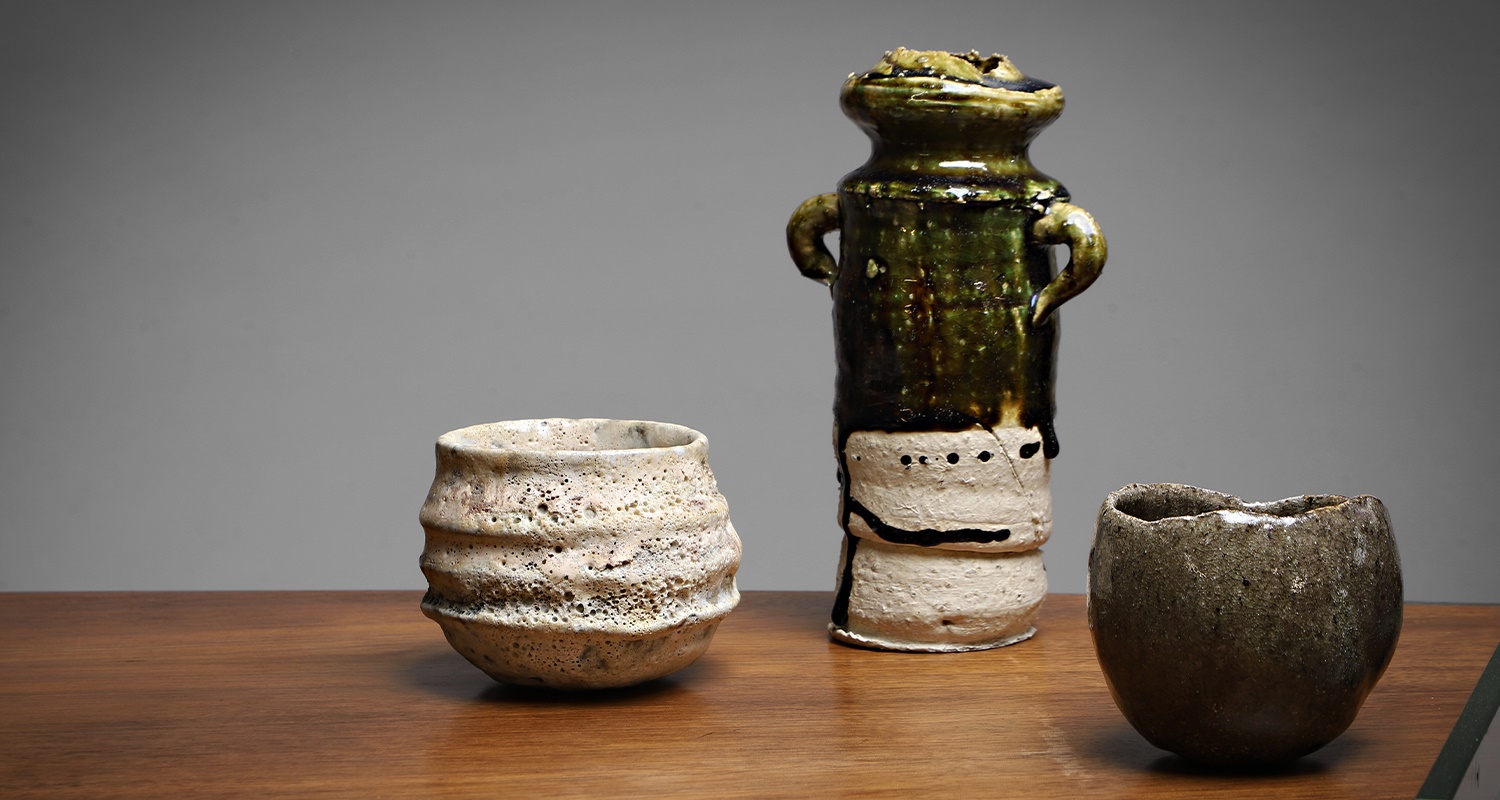
Left: Aki Moriuchi (Japanese-British, b.1947), a bowl (£150-250), Centre: Koie Ryoji (Japanese, 1938-2020), an 'Oribe'-style flower vase (£250-350), Right: Akiko Hirai (Japanese, b.1970), a tea bowl (£100-150)
The earliest known Japanese pottery dates to the Jōmon period (c.12,000–300 BC), characterised by hand-built earthenware vessels decorated with distinctive cord-marked patterns. These works were used in both ritual and domestic contexts, establishing an enduring connection between ceramics and spirituality within Japanese culture.
By the Meiji period (1868-1912), Japanese ceramics had gained significant international recognition through world fairs and global trade. As Japan modernised rapidly and absorbed Western influence, ceramics increasingly became viewed not only as craft objects, but also as expressions of national identity.
The twentieth century oversaw a revolutionary approach to pottery and stoneware; its aesthetics and value were not connected to tradition alone but rooted in philosophical discourse. The philosophical foundation of modern Japanese ceramics was profoundly shaped by Soetsu Yanagi (also known as Yanagi Muneyoshi), founder of the mingei (folk craft) movement in the early twentieth century. At a time when industrialisation and Western influence were rapidly transforming Japan, Yanagi advocated for a renewed appreciation of everyday handmade objects created by anonymous craftsmen. Through his writings, collecting practices, and establishment of the Folk Crafts Museum in Tokyo, he helped position Japanese ceramic culture as an artistic tradition worthy of recognition on its own terms.
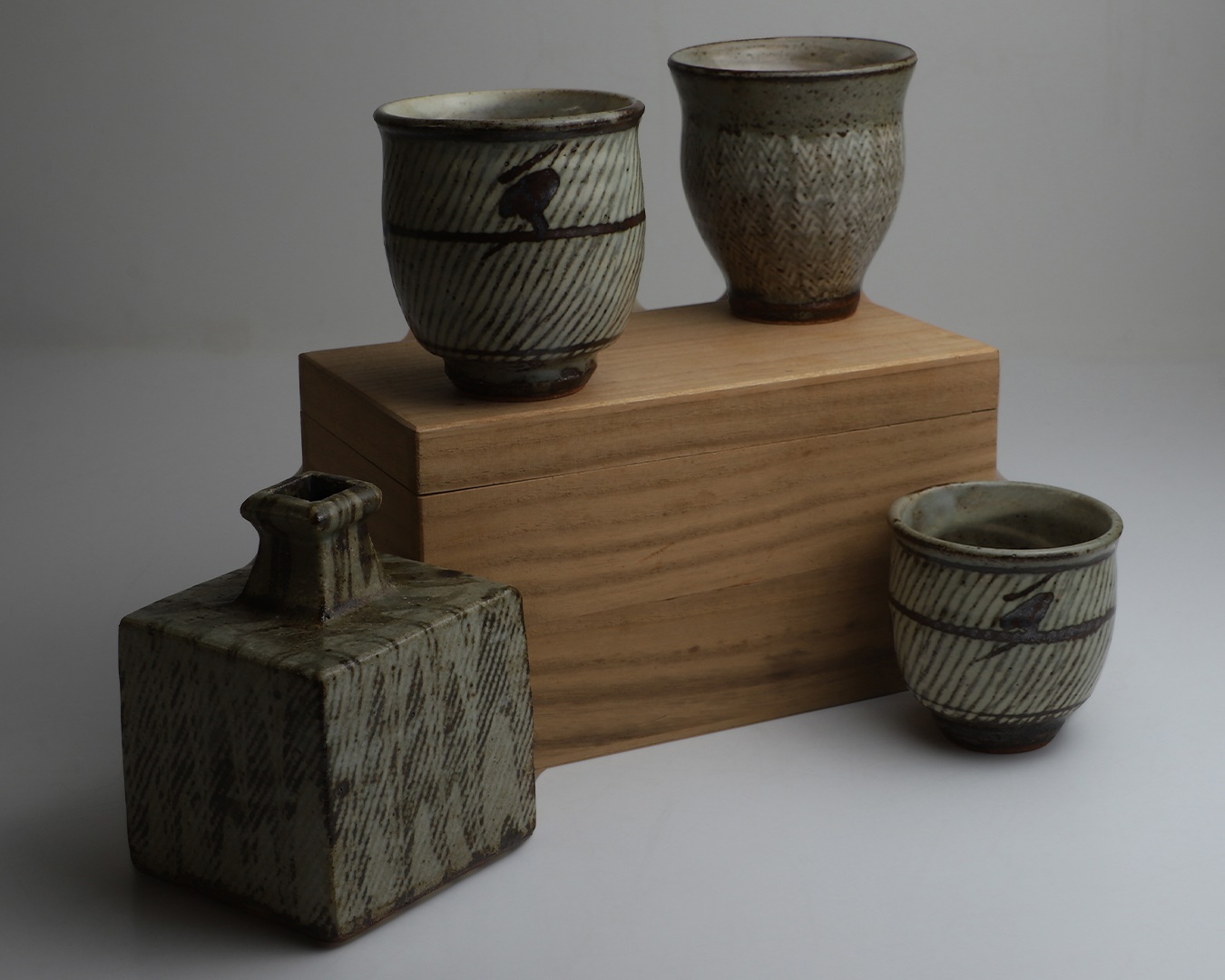
Tatsuzō Shimaoka (Japanese, 1919-2007), a tea bowl and square vase (£150-250) and a pair of tea bowls (£150-250)
Today, Japanese ceramics are broadly defined through three principal material categories: porcelain (jiki), earthenware (toki), and stoneware (sekki). Japanese porcelain, alongside Chinese production, played a significant role in shaping the later development of European porcelain traditions. Fired at exceptionally high temperatures of around 1,300°C, Japanese porcelain is known for its dense, durable, and minimally porous body.
Toki refers to glazed earthenware pottery, where clay vessels are coated in glaze and fired until hardened. In contrast, sekki (stoneware) represents a more traditional ceramic form characterised by iron-rich clay bodies, natural textures, and restrained surface treatment. Rather than relying on heavy decoration, stoneware often embraces the raw qualities of the material itself.
Many stoneware pieces are wood-fired, allowing ash from the kiln to settle and melt naturally onto the surface during firing. The interaction between flame, ash, clay, and temperature creates unpredictable patterns, tonal variations, and organic surface effects unique to each object. These accidental traces of process are highly valued within Japanese ceramic aesthetics, reflecting a philosophical notion dictated by the principles of mingei movement.
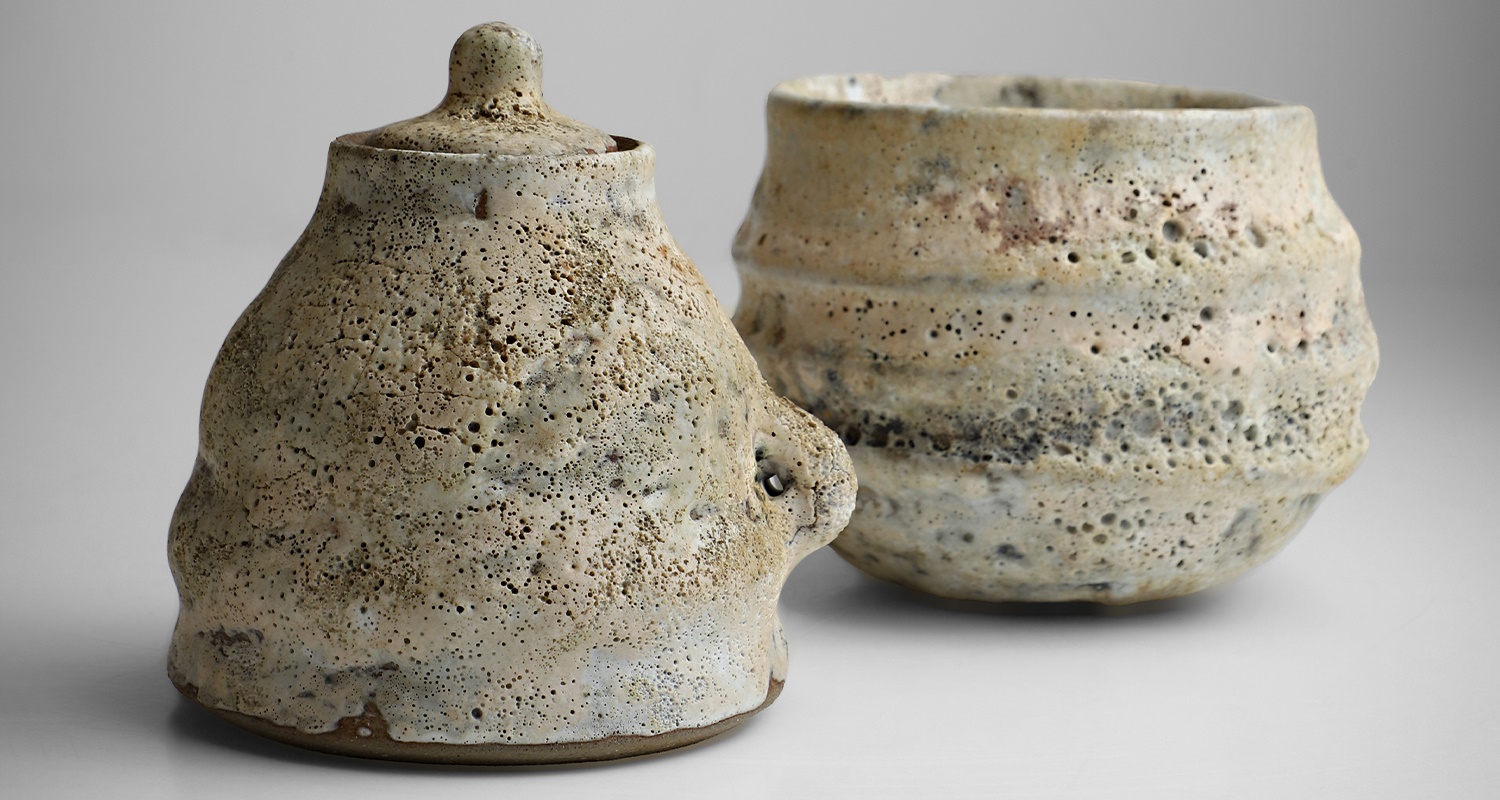
Aki Moriuchi (Japanese-British, b.1947) | Left: a lugged vase and cover (£200-300) & Right: a bowl (£150-250)
The works of Aki Moriuchi, Hiroaki Taimei Morino, Koie Ryoji, Akiko Hirai, and Takeshi Yasuda demonstrate the remarkable breadth of contemporary Japanese ceramics, while remaining deeply connected to the philosophical and material traditions that continue to shape the discipline. Although each artist possesses a highly individual visual language, their works share a sensitivity to process, materiality, and the balance between control and unpredictability.
In the sculptural forms of Morino and Koie Ryoji’s radical experimentation with clay, contemporary Japanese ceramics move beyond functionality into the realm of abstraction and conceptual expression. In contrast, the works of Akiko Hirai and Takeshi Yasuda retain a quieter dialogue with traditional vessel forms, embracing asymmetry, tactile surfaces, fluid movement, and the spontaneous effects created through firing. Particularly poignant are the two Yasuda bowls that are presented in July’s Design sale, repaired using the traditional kintsugi technique, where fractures are restored with lacquer and gold, transforming damage into part of the object’s history rather than concealing it.
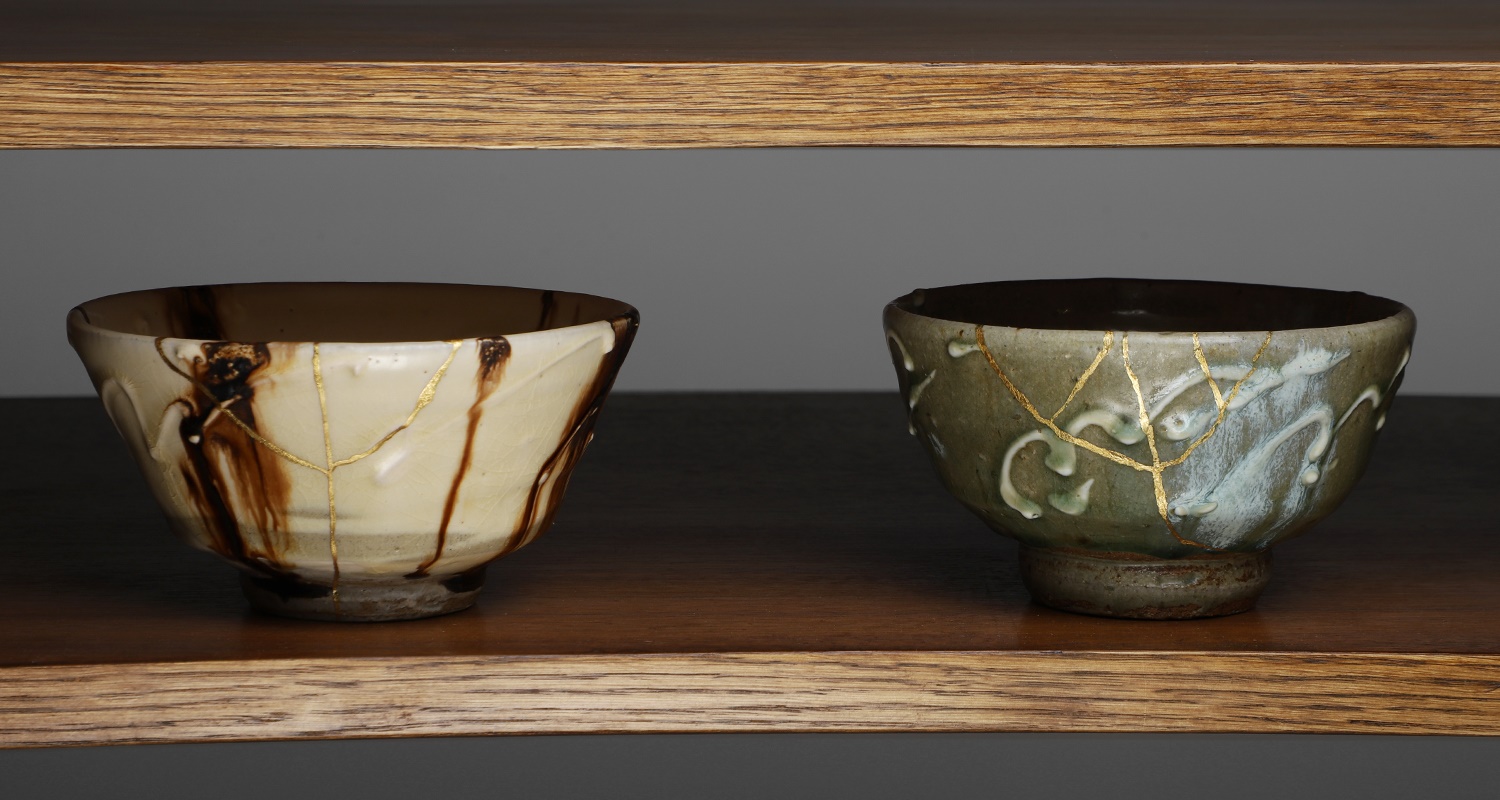
Takeshi Yasuda (Japanese, b. 1943), two bowls (£150-250)
Across these artists’ works, the influence of Japanese aesthetics - wabi-sabi, imperfection, impermanence, and collaboration with natural forces - remains deeply present. We are proud to present these works within the upcoming sale, celebrating both the enduring traditions and evolving future of contemporary Japanese ceramics.

design@sworder.co.uk | 01279 817778
Japanese ceramics are highly appreciated for balanced coexistence of tradition and innovation; while older techniques are respected and preserved, new forms and ways of working with ceramics keep emerging. Today, Japan can boast with more than 100 pottery centres, each maintaining their own techniques, tradition and utilization of local materials.
17 June 2026
The varied and rich artistic traditions of the Indian, Islamic and Southeast Asian worlds continue to fascinate a global network of collectors and institutions. This year, Sworders Auctioneers have established a new area in its biannual Asian Art sales, dedicated to celebrating a great variety of works from these vibrant centres of artistic excellence.
17 June 2026
The Duke of Sussex joined HALO Ukrainian deminers on the ground in Bucha to see first-hand how innovation is reshaping one of the world's most dangerous jobs.
15 June 2026